On the morning of October 25, a delegation from the Skolkovo Institute of Science and Technology (Skoltech), comprising Associate Professor Dmitry Dzhurinskiy from the Center for Materials Technologies and Sergei Vasilyev, Executive Director of Strategic Partnerships in the Academic Relations Department, visited the Institute for Ocean Engineering (IOE) at Tsinghua Shenzhen International Graduate School (Tsinghua SIGS).
Representatives from SIGS, including Zhang Yi, Director of the Office of Global Affairs; Guo Yutao, Deputy Director of the Office of Academic Affairs; Associate Professor Li Binbin, Associate Dean of IOE; and Associate Professor Jiang Yuelu from IOE, participated in the meeting, which was chaired by Associate Professor Li Binbin.

Zhang Yi opened with an overview of Tsinghua SIGS, stressing SIGS’s expanding global partnerships and expressing hopes for deeper research and talent exchanges with Russian institutions. Li Binbin presented IOE’s teaching-and-research portfolio and joint-training achievements, while Guo Yutao outlined the current models and procedures for international co-training at SIGS.
Sergei Vasilyev introduced Skoltech’s disciplinary layout, development history and international outreach, noting Skoltech’s close ties with many Chinese universities. He highlighted Skoltech’s strengths in artificial intelligence, advanced materials engineering and energy conversion, and its interdisciplinary agenda, which aligns closely with that of Tsinghua SIGS. Dmitry Dzhurinskiy then briefed participants on the research focus and outputs of Skoltech’s Thermal Spray Coating Laboratory.
During the open discussion, both sides agreed to take the integration of ocean engineering and intelligent technologies as the first step toward broader cross-disciplinary collaboration, pledging to widen the scope of future exchanges.

That afternoon, the delegation visited the graphene laboratory at the Institute of Materials Research and the Shenzhen Park of the Hetao Shenzhen-Hong Kong Science and Technology Innovation Cooperation Zone. Officials from the Hetao Development Authority presented their unique advantages and international research environment, welcoming global researchers to pursue joint projects and commercialization of research outcomes.
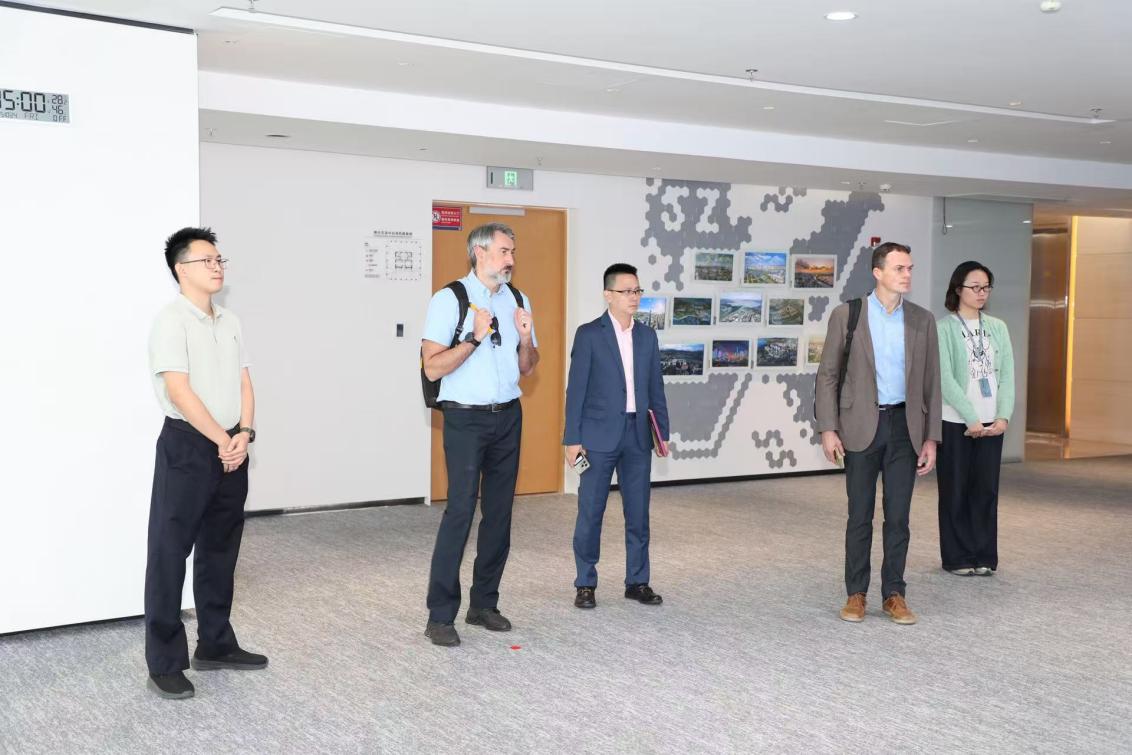
Visit to Shenzhen Park of the Hetao Shenzhen-Hong Kong Science and Technology Innovation Cooperation Zone
The visit consolidated mutual understanding of each side’s international-cooperation pathway. Shenzhen’s vibrant innovation ecosystem and strong industrial links offer an ideal setting for future cross-disciplinary initiatives between Tsinghua SIGS and Skoltech.
About Skolkovo Institute of Science and Technology
Skoltech Institute of Science and Technology, established in 2011 in collaboration with MIT, is an English-taught STEM university located in Moscow. Dedicated to cultivating technology leaders and promoting innovation, it tackles major challenges facing Russia and the world. Acting as an active “technology factory,” Skoltech emphasises interdisciplinary research in six priority areas: life sciences, healthcare and agriculture; communications and quantum technology; artificial intelligence; advanced materials and engineering; energy transition; and frontier science. It has achieved breakthroughs in nanotechnology, renewable energy and data science.
Despite its short history, Skoltech ranks among the world’s top 100 young Universities in the Nature Index 2019 and 2021. Research.com places it second among Russian universities overall, first nationally in genetics and materials science, and SCImago ranks its computer science first in Russia. Its alumni have become influential entrepreneurs and researchers worldwide, underscoring Skoltech’s status as a leading force in Russian and international science and education.
Source: Institute for Ocean Engineering
Edited by Peng Bin & Chen Jundou
Reviewed by Lin Zhoulu