On April 14, over 50 representatives and experts from universities in China and Vietnam gathered in Tsinghua University in Beijing for a sub-forum of the the China–Vietnam Forum on Higher Education, Science, Technology and Innovation Cooperation to discuss pathways for the coordinated development of higher education between the two countries.
Organized by Tsinghua Shenzhen International Graduate School (Tsinghua SIGS), the sub-forum focused on topics such as education development in the AI era and talent cultivation, aiming to advance China–Vietnam higher education collaboration and foster a regional talent community.
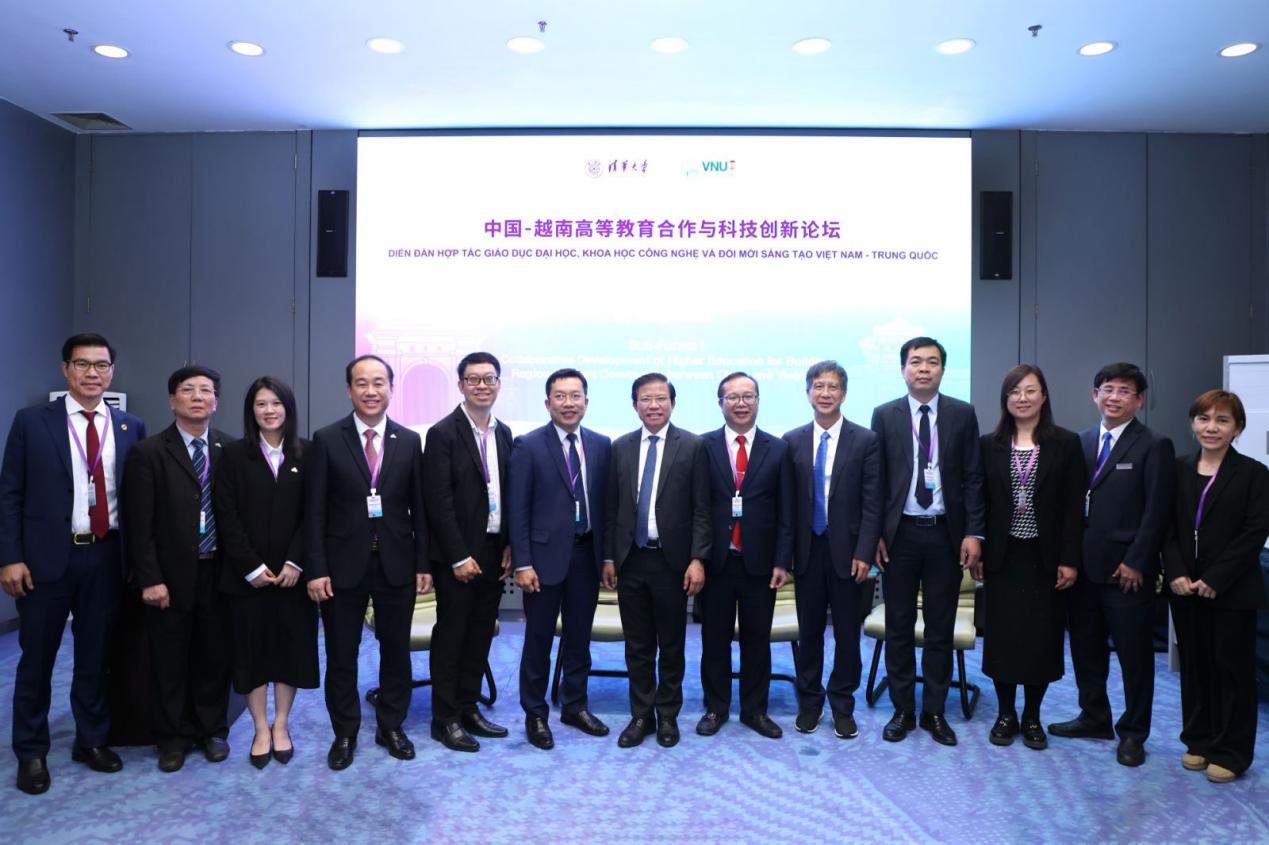
Sub-forum participants pose for a group photo
Chaired by Tsinghua SIGS Associate Dean Zuo Jian’e, the sub-forum featured five keynote speeches.
Highlights of keynote speakers
Prof. Zhang Yu from Tsinghua University proposed to use AI to empower personalized learning, classroom interaction and inclusive educational resources. She also emphasized the irreplaceable role of teachers in teaching organization, social interaction, and value guidance. Her insights offered valuable perspectives for deepening educational cooperation and cultivating innovative talent in the intelligent era.
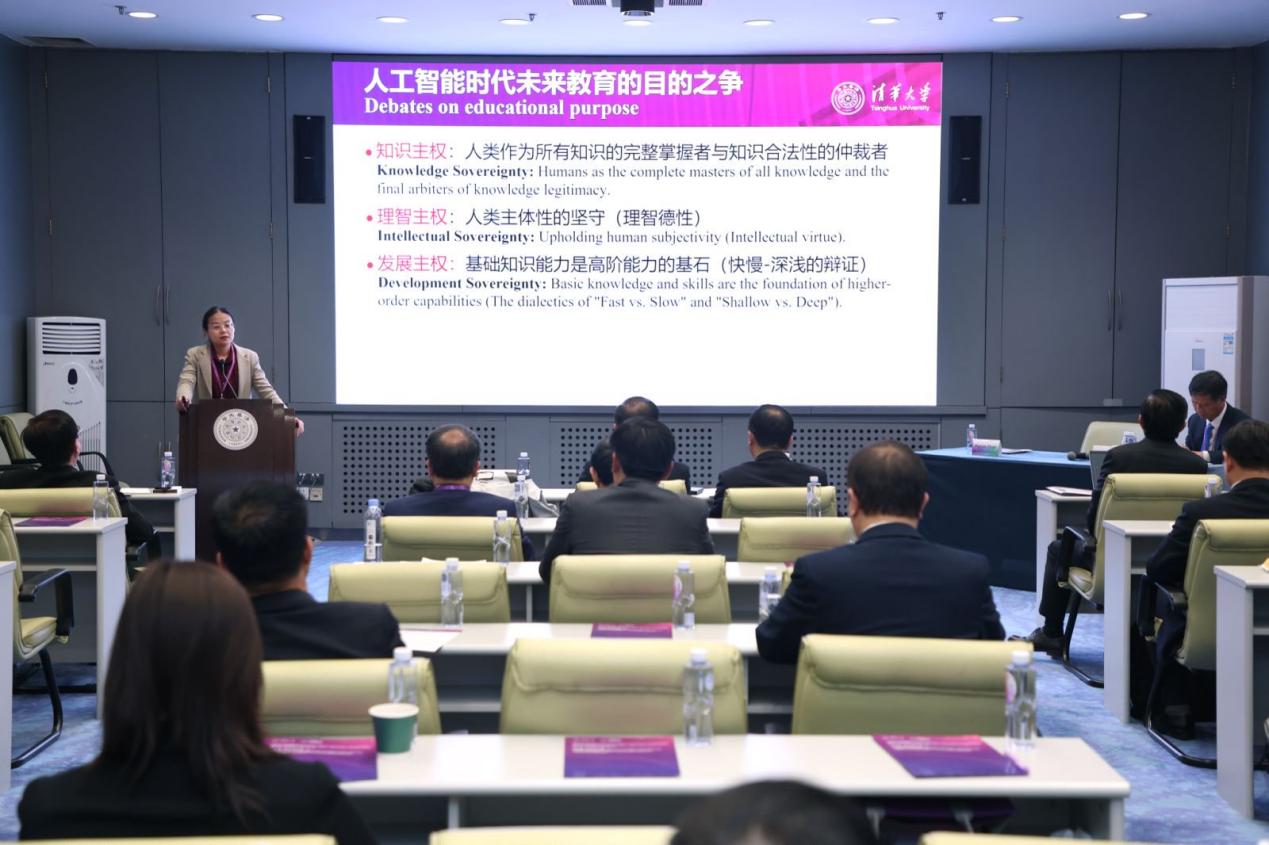
Prof. Zhang Yu delivers a speech
Prof. Hoang Anh Tuan, Rector of the University of Social Sciences and Humanities at Vietnam National University, Hanoi (VNU-USSH), focused on the current state and trends of academic and research cooperation in the humanities and social sciences between China and Vietnam. Using VNU as an example, he reviewed the history of institutional exchanges between the two countries, analyzed their complementary strengths, and expected deeper collaboration in research, faculty and student exchanges, and resource sharing.
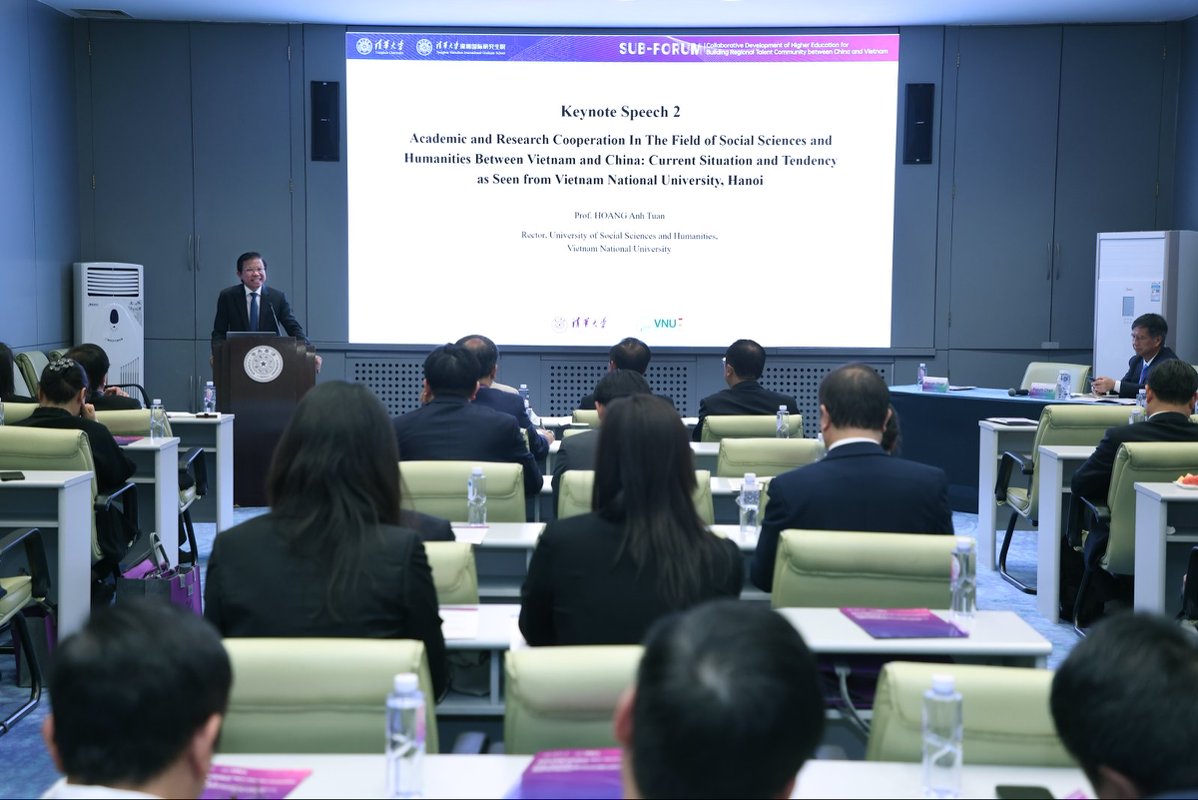
Prof. Hoang Anh Tuan delivers a speech
Prof. Wu Feng, Vice President of Hohai University, shared the university’s cooperation achievements with Vietnamese partners in areas such as hydraulic engineering and water resources. He noted that by building bridges through disciplinary strengths, China–Vietnam higher education collaboration can extend from classrooms to the field, from laboratories to construction sites, and from academic research to real-world solutions.
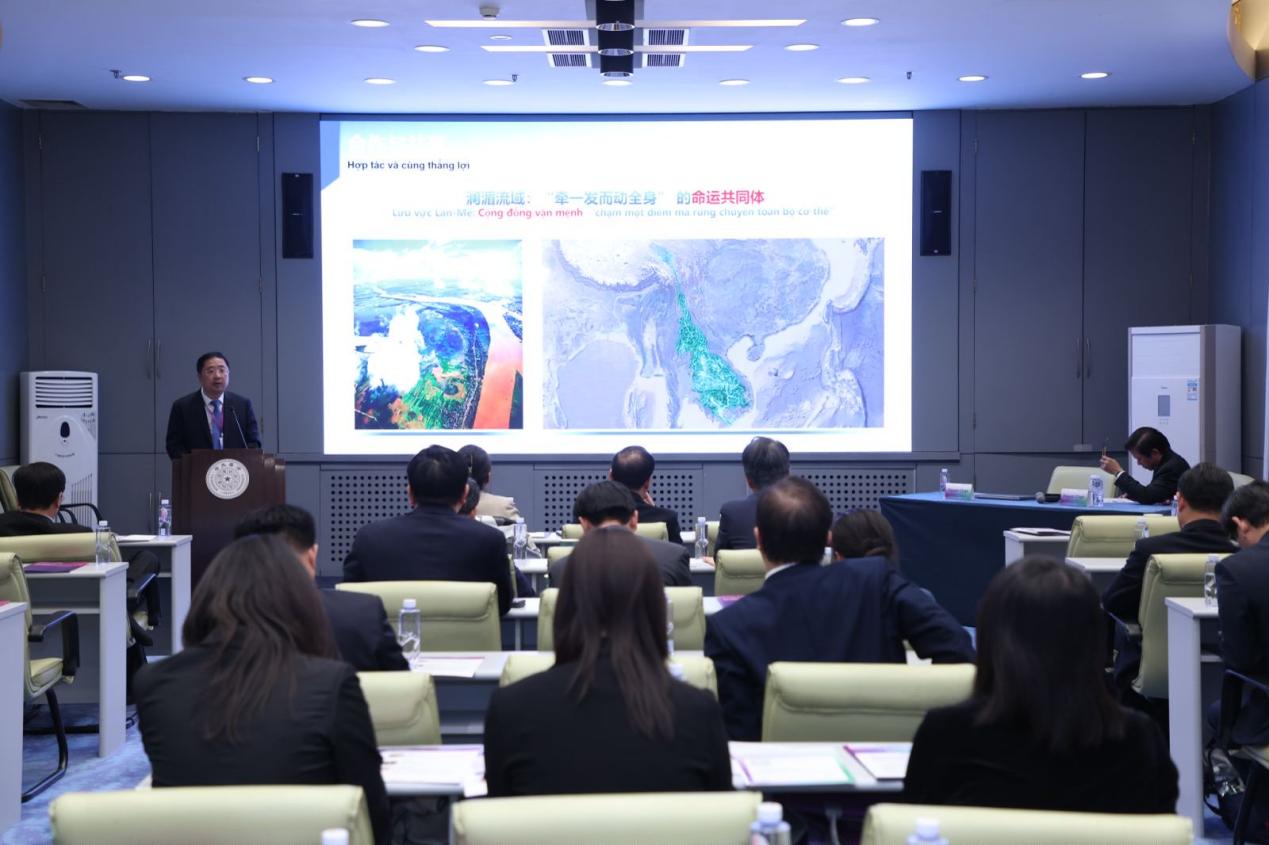
Prof. Wu Feng delivers a speech
Associate Prof. Nguyen Thanh Tung, President of CMC University, drew on his research experience in Shenzhen to suggest that, in the AI era, universities should deeply integrate into the innovation ecosystems of research institutions and enterprises to advance the coordinated development of education, research, and innovation. He also called for the joint establishment of research centers and industry-driven talent cultivation programs to further strengthen bilateral cooperation.
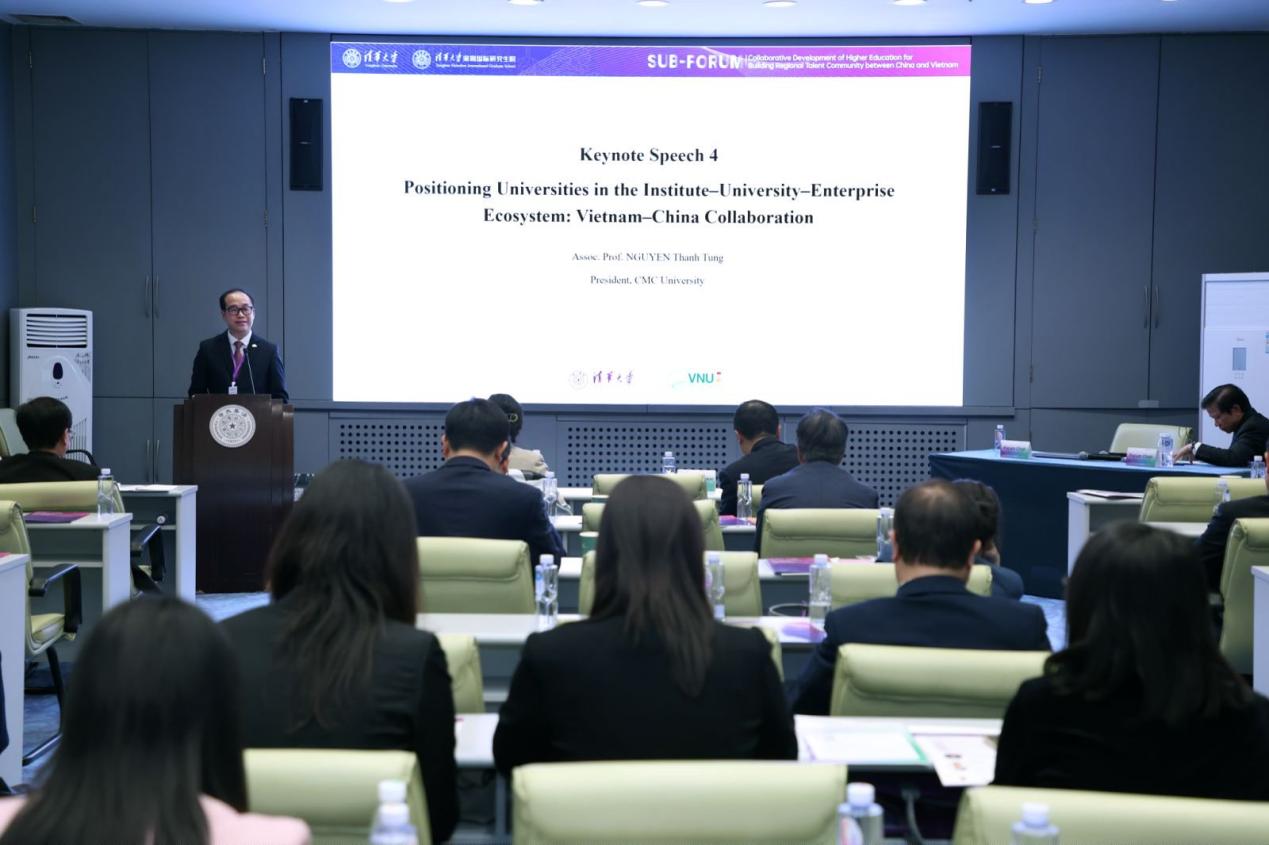
Associate Prof. Nguyen Thanh Tung delivers a speech
Prof. Zuo Jian’e shared the experience of Tsinghua SIGS in integrating industry, academia, and research, as well as in advancing university–enterprise collaboration by leveraging Shenzhen’s innovation ecosystem. He introduced innovative engineering talent training programs aligned with cutting-edge industrial needs and developed in collaboration with leading industry partners, offering a “Tsinghua solution” for engineering talent cultivation.
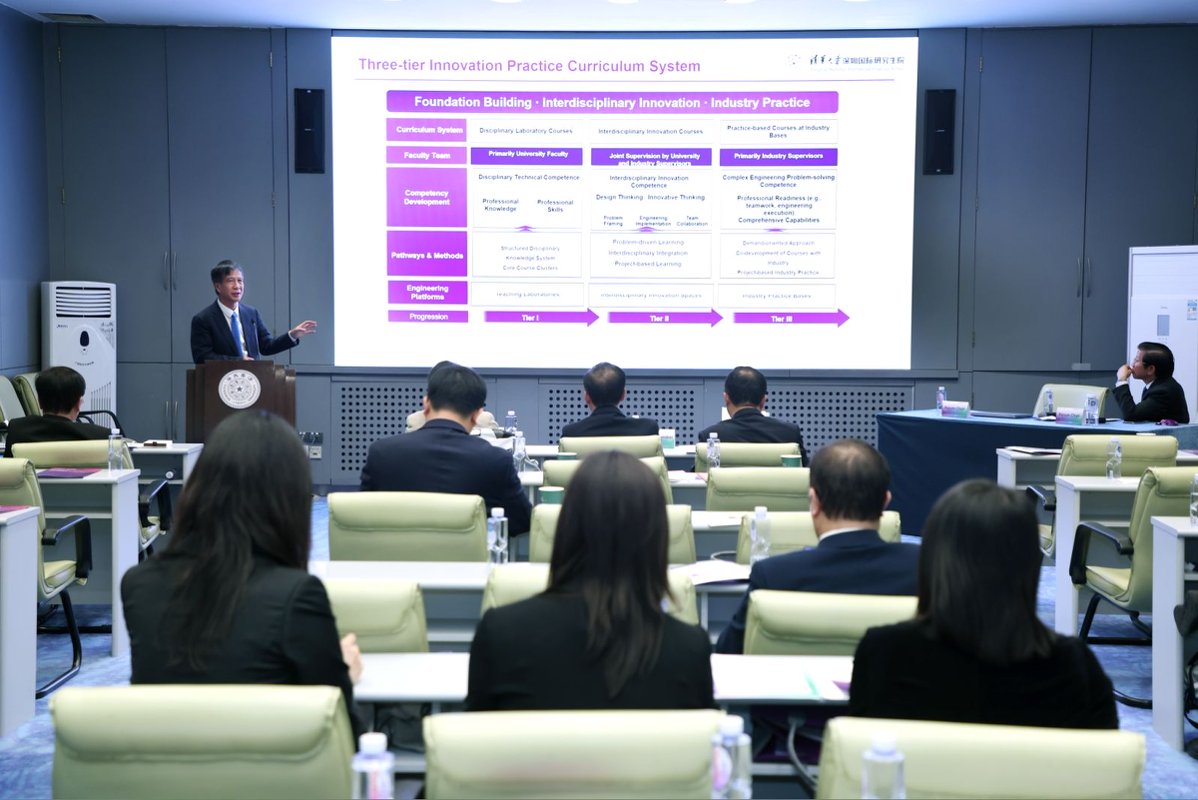
Prof. Zuo Jian'e delivers a speech
Following the keynote speeches, participants engaged in a roundtable discussion on three key themes: challenges in joint development, talent cultivation models, and pathways for future cooperation.
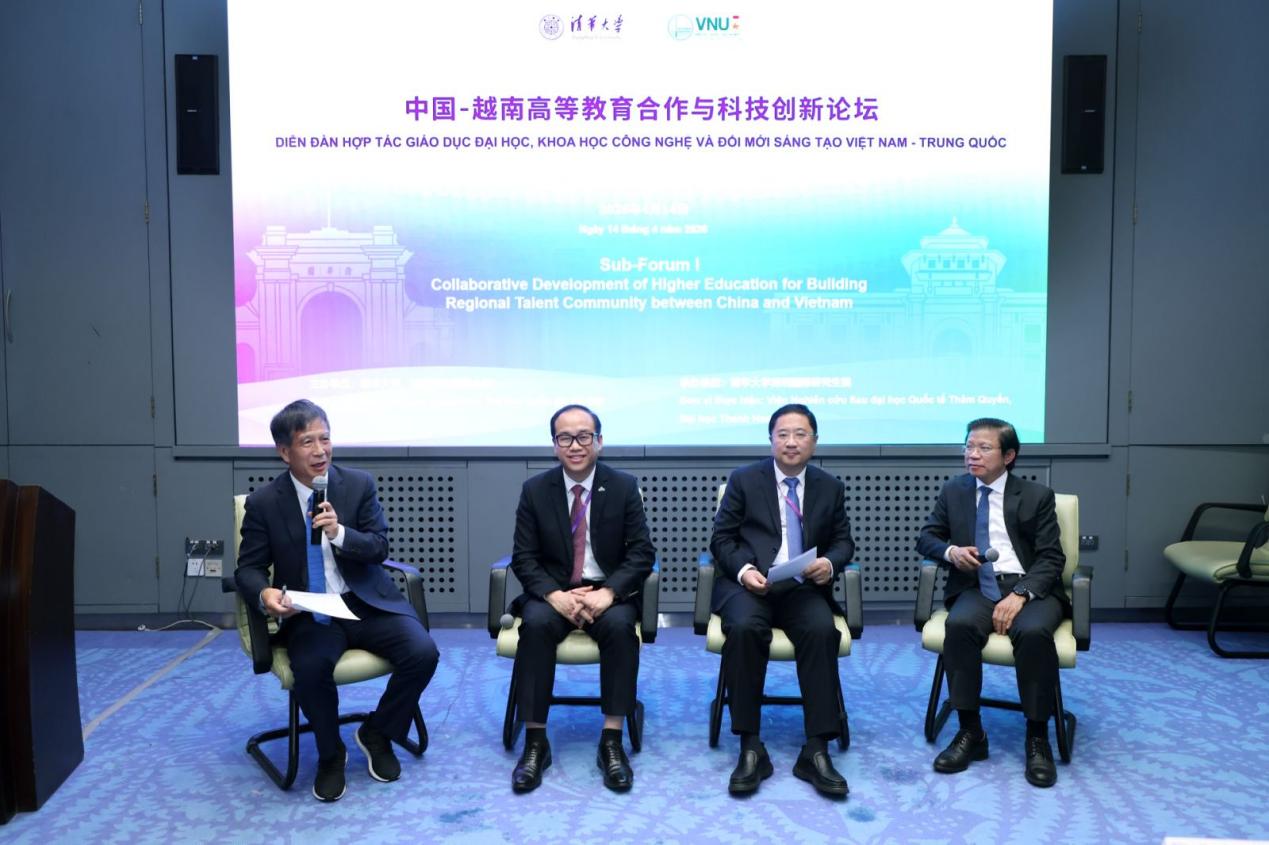
Participants engage in the roundtable discussion
The guests reached a consensus that the geographical proximity, cultural affinity, and complementary strengths of China and Vietnam provide a solid foundation for supporting both countries’ national development strategies and building a China–Vietnam community with a shared future. Both sides emphasized the importance of deepening cooperation in joint talent cultivation, research collaboration, and youth exchanges to foster mutually beneficial outcomes in higher education.
The sub-forum has further established a high-level platform for academic exchange and collaboration between China and Vietnam, marking a new starting point for universities in both countries to elevate their partnerships.
Source from the Office of Global Affairs
Edited by Peng Bin, Wang Jingli
Reviewed by Chen Jundou, Lin Zhoulu, and Nie Xiaomei
Layout by Peng Bin & Hu Jingwen