From Aug. 25 to Sept. 7, the Seminar on Healthcare Service Management for Belt and Road Countries was held at Tsinghua Shenzhen International Graduate School (Tsinghua SIGS). A total of 25 senior health officials, deans of medical schools, and hospital directors from seven countries, including Ethiopia, Kenya, Indonesia, Palestine, North Macedonia, Azerbaijan and Romania, attended the 14-day program.
Cao Saixian, Director General of the Foreign Affairs Office of Shenzhen Municipal People’s Government; Prof. Liu Bilu and Prof. Wu Qianyuan, Vice Deans of Tsinghua SIGS; Prof. Zhang Zongjiu, Executive Associate Dean of the Institute for Hospital Management of Tsinghua University; Prof. Li Qiulin, Director of the Institute of Continuing Education at SIGS; Associate Prof. Jiang Nan of the Institute for Hospital Management; and officials from the Office of Global Affairs at Tsinghua SIGS attended the opening and closing ceremonies.
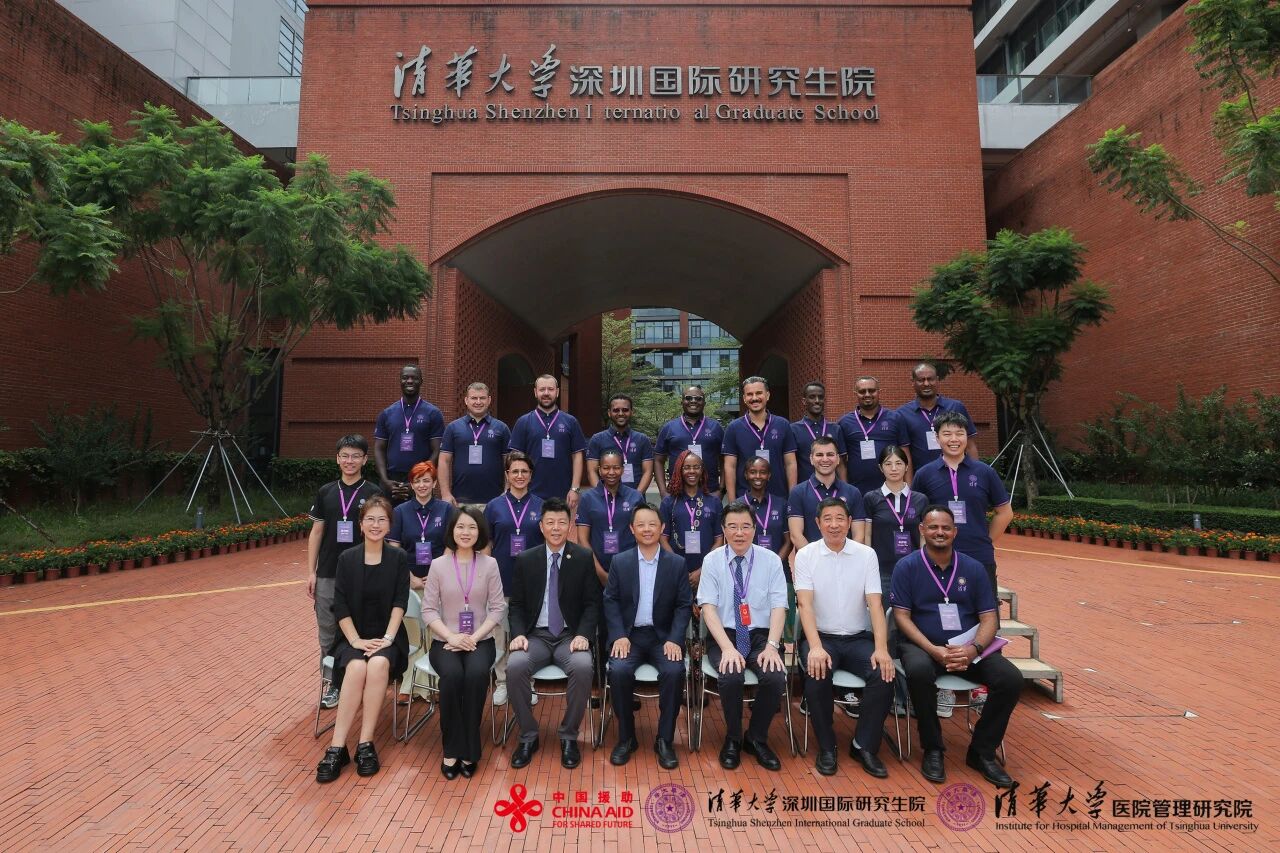
Group photo at the opening ceremony.
In-Depth Learning: Building Knowledge Systems for Health Governance
Classroom teaching centered on two modules: health governance and artificial intelligence (AI). The health governance module provided a systematic introduction to China's healthcare system architecture, medical insurance reform, and the global health governance landscape, offering an institutional framework for participants to understand China's healthcare reform experience.
The AI module, the core of this seminar, covered cutting-edge topics including AI healthcare technology evolution, medical imaging and computer-aided diagnosis applications, precision medicine and drug development, and hospital data governance. Progressing from technical applications to ethical challenges, the curriculum provided a practical Chinese solution for cultivating healthcare AI management talent and bridging the global digital divide.
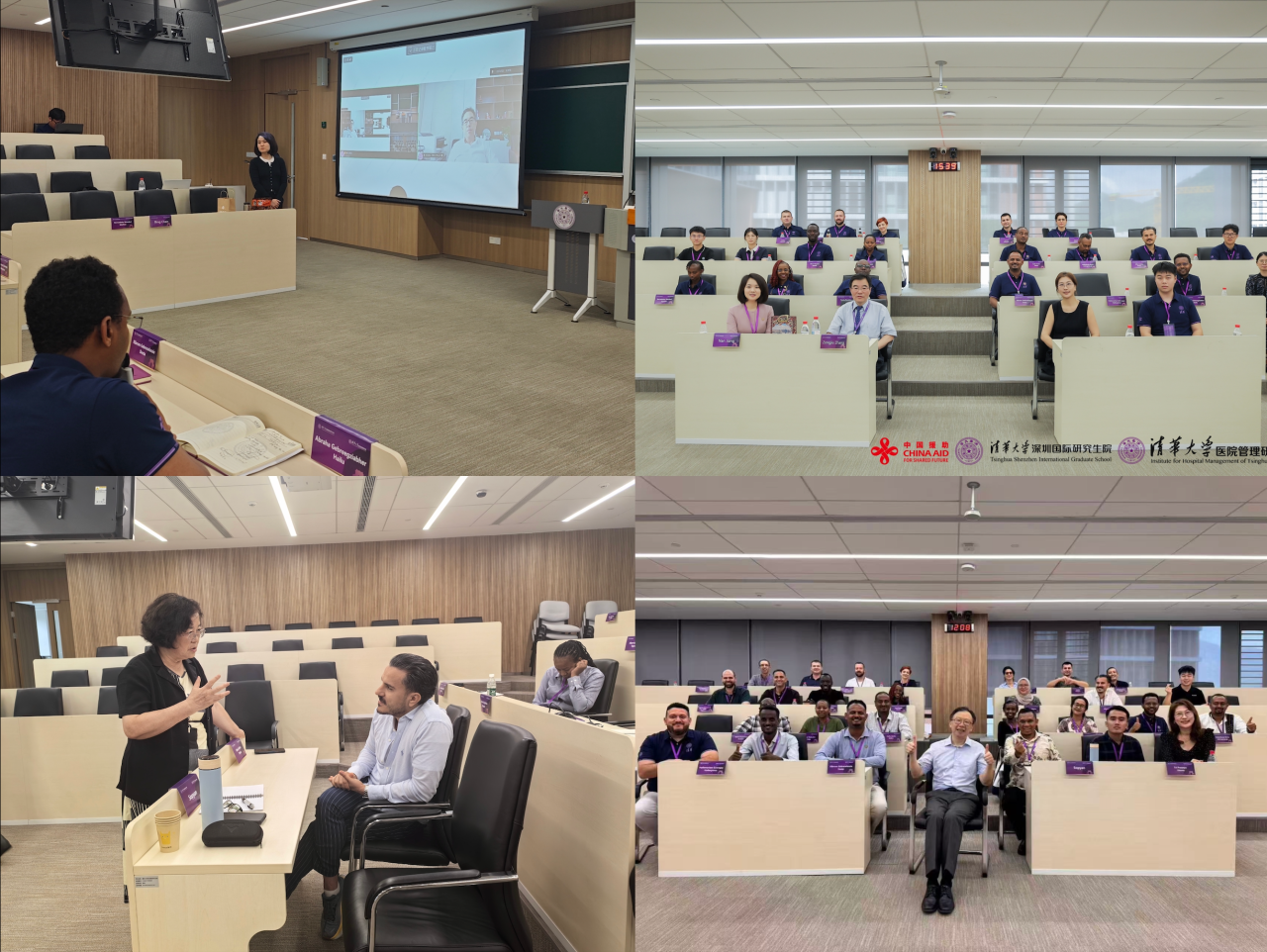
(Clockwise from top left) In-class teaching by Prof. Huang Tianyin (online), Prof. Zhang Zongjiu, Prof. Yang Yansui, and Prof. Ren Minghui.
Learning by Doing: From Clinical Frontlines to Innovation Frontiers
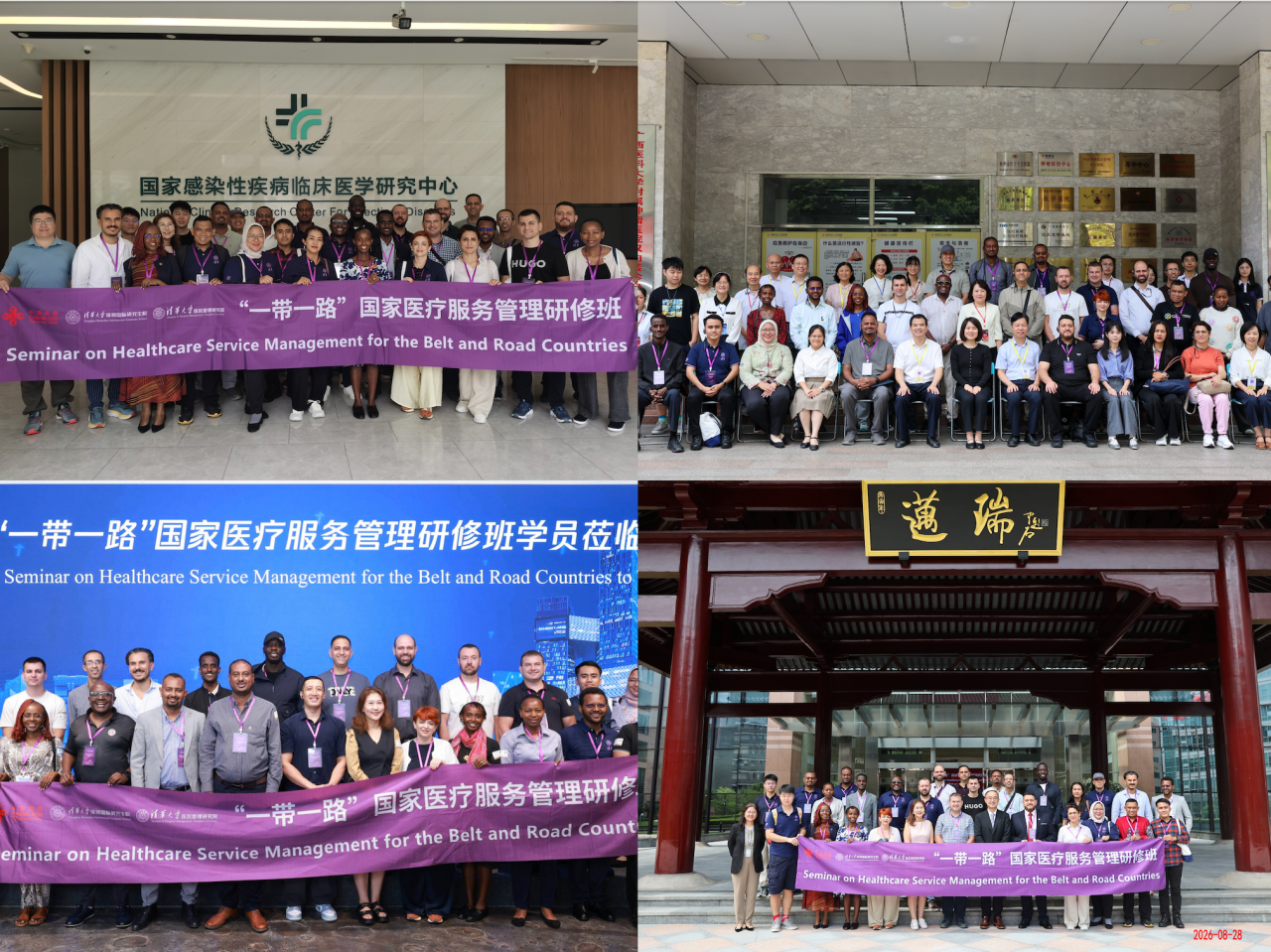
On the clinical frontline, participants visited Shenzhen Third People's Hospital and Wuzhou Red Cross Hospital to study mechanisms for major infectious disease prevention and control, nasopharyngeal carcinoma prevention, and clinical collaborative research. They also toured community health centers in Shenzhen and grassroots health clinics in Wuzhou to experience China's integrated prevention-and-treatment primary healthcare model. At the innovation frontier, participants visited Tencent and Mindray to experience cutting-edge medical AI large-model applications, and Fosun Pharma and Kangtai Biological Products to learn about the full chain of innovative drug and vaccine development and industrialization.
Cultural Immersion: Building Strong Bonds of People-to-People Connectivity
Beyond the formal program, a rich array of cultural experiences gave participants a multi-dimensional understanding of China. In the classroom, they learned about Chinese-style modernization, poverty alleviation practices, and traditional Chinese medicine theory.
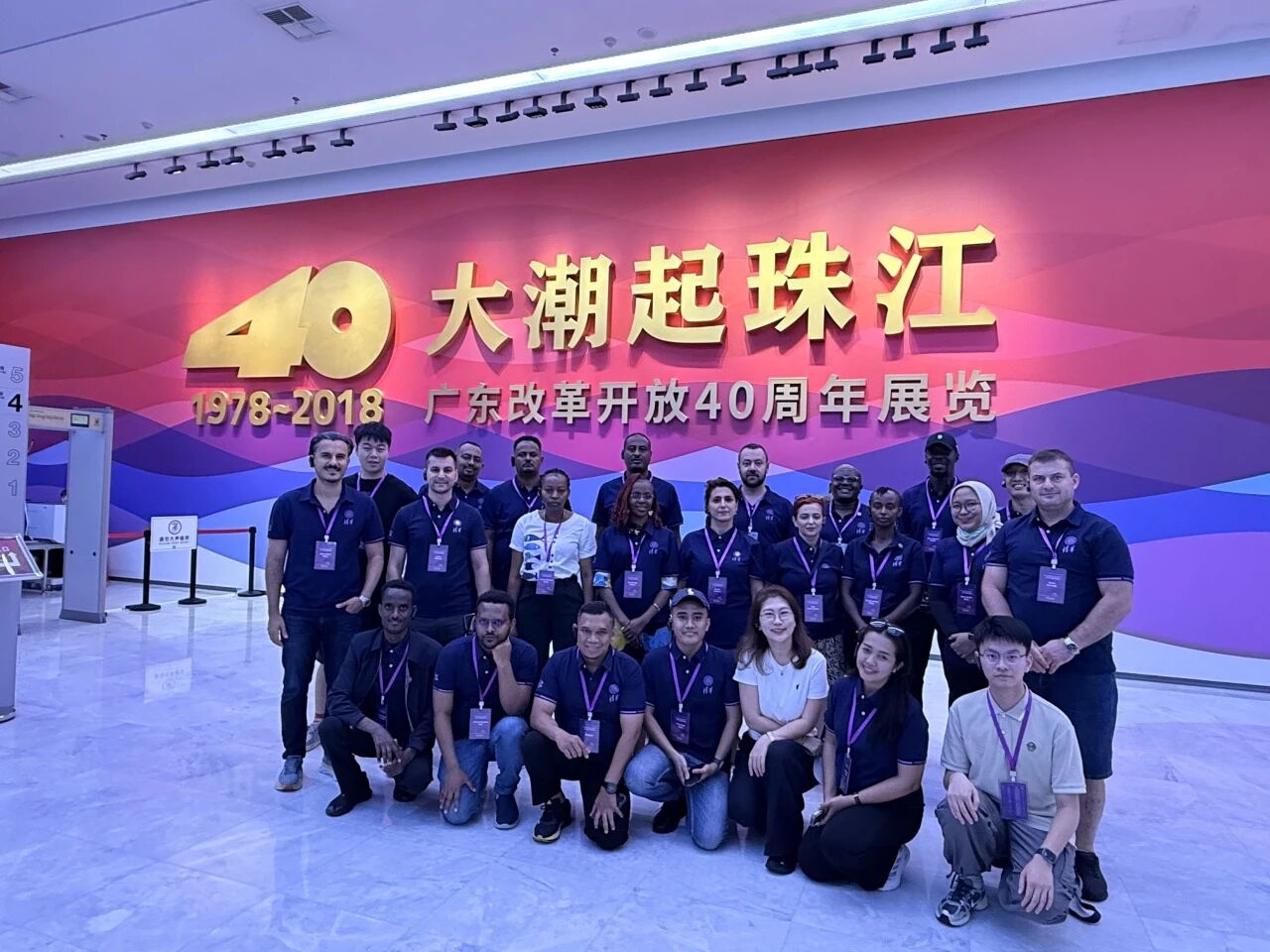
In Shenzhen, they visited Shenzhen Reform and Opening-up Exhibition Hall and Nantou Ancient City to appreciate the spirit of Shenzhen Special Economic Zone and the cultural charm of Lingnan. In Wuzhou, they experienced Liubao tea culture, the arcade city architecture, and the Xizhou Island Xiali Folk Song — an intangible cultural heritage. Educating through culture and connecting through heart, these experiences that transcend language and borders have laid a strong emotional foundation for people-to-people connectivity among Belt and Road partner countries.

A visit to Nantou Ancient City.
Mutual Learning: Participants' Voices on Cooperation
Over 14 days, participants from various countries forged deep friendships. Dr. Desta Kibrom Gebreselassie, Chief Executive Director of the College of Health Sciences at Mekelle University in Ethiopia, was deeply impressed by Shenzhen’s governance model and talent attraction policies and expressed his intention to bring China’s experience in AI and digitalization back to Ethiopia.
Mr. Muhammad Bayu Ismoyo, Health Policy Analyst at the Ministry of Home Affairs of Indonesia, looked forward to strengthening future talent development cooperation and sending Indonesian health officials to pursue further studies at Tsinghua University. Dr. Kevin Onyinkwa Ombati, Radiology Program Director at Aga Khan University Hospital in Kenya, was impressed by China's regulatory practices in medical AI and stated that he would bring Chinese experience back to Kenya to inform the development of AI application guidelines in his home country.
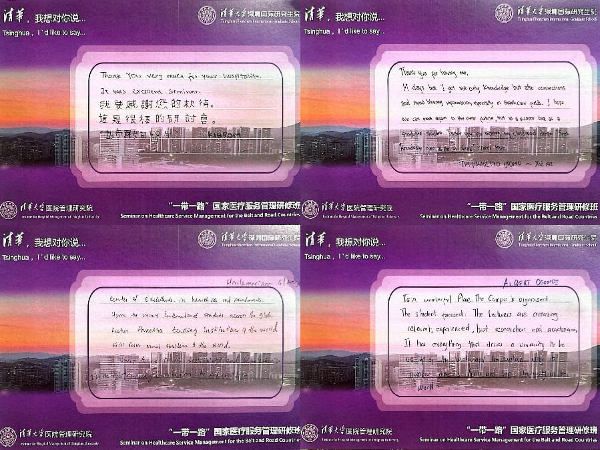
Handwritten messages from participants.
Against the backdrop of deepening global health governance cooperation and advancing health collaboration under the Belt and Road Initiative, this seminar represents a direct outcome of Tsinghua University's intensified engagement with Africa. Last November, a Tsinghua University delegation led by senior university leaders visited Ethiopia and Kenya and signed a Memorandum of Understanding (MOU) with Mekelle University. Less than a year later, ten representatives from Ethiopia and Kenya traveled to China for this seminar, demonstrating the rapid implementation of the cooperation consensus reached during the visit.
Tsinghua SIGS will continue to leverage its strengths in interdisciplinary engineering-medical integration and hospital management education, cultivate internationally visioned healthcare management talent, deepen health cooperation with partner countries, advance the building of China’s Health Silk Road, and contribute to building a global community of health for all.
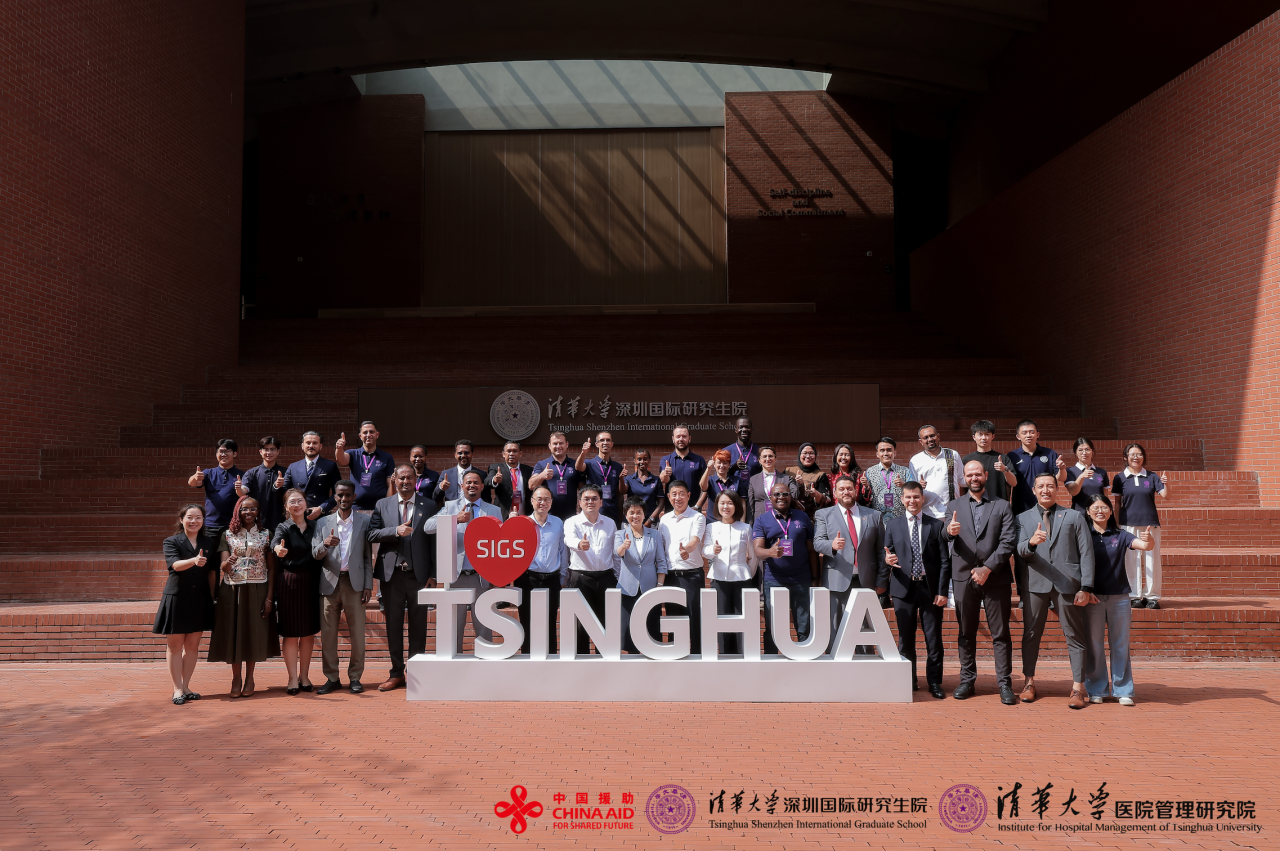
Group photo at the closing ceremony.
Source from the Training College
Edited by Wang Jingli
Reviewed by Chen Jundou, Lin Zhoulu and Nie Xiaomei
Layout by Peng Bin and Yuan Yiling