Assistant Professor Yu Chao of Tsinghua Shenzhen International Graduate School (Tsinghua SIGS) was included in MIT Technology Review’s Innovators Under 35 Asia Pacific 2026 list.

Selected for the list’s pioneers category, Yu was recognized for developing RLinf, a large-scale reinforcement learning framework that she and her team designed to treat robots as part of the resources available for model training.
During her postdoctoral research, she worked with her team to develop OmniDrones, a reinforcement learning platform for drones that provides a more efficient simulation and training environment for complex flight tasks.
At the same time, she conducted in-depth research on reinforcement learning for large language models, carrying out theoretical and empirical analyses of the optimization mechanisms behind DPO and PPO.
As her research expanded toward real-world robotics, Yu and her team developed RLinf. The framework aims to connect model training, simulation, computing resources and robots, which were previously handled as separate components. It also introduces the idea of “using robots like GPUs,” treating robots as unified computational resources that can be abstracted and scheduled, allowing different robots to participate in large-scale, long-term online learning.
RLinf has been integrated into the PyTorch Ecosystem and NVIDIA Isaac Lab ecosystems and has been adopted by multiple companies and university research teams.
In 2026, Yu co-founded the physical intelligence company Striding AI. What she hopes to continue advancing is enabling robots to no longer rely solely on a single round of training before deployment, but instead to learn, adapt, and evolve through continuous interaction in the real world.
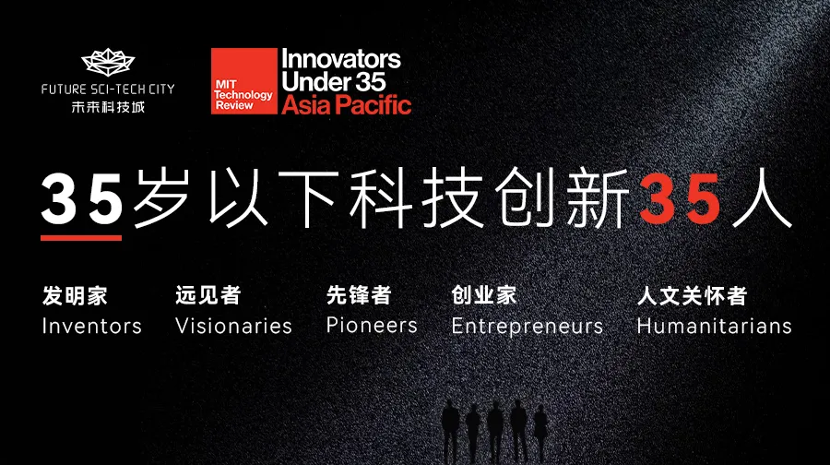
Established in 1999, Innovators Under 35 is an annual list that recognizes outstanding innovators who are younger than 35 and is the most prestigious recognition worldwide from MIT Technology Review, according to its official website.
Innovators Under 35 Asia Pacific honors the best 35 young talents from countries such as Australia, Brunei, China, Indonesia, Japan, Laos, Malaysia, New Zealand, Philippines, Singapore, South Korea, Thailand, and Vietnam, whose superb technical work promises to change the world.
The list recognizes the development of new technology or the creative application of existing technologies to solve global problems in industries such as biotechnology, materials, computer hardware, energy, transportation, communications, and the Internet.
Source from the Institute of Data and Information
Edited by Wang Jingli
Reviewed by Chen Jundou, Lin Zhoulu and Nie Xiaomei
Layout by Yuan Yiling