A delegation led by Ouyang Zheng, Dean of Tsinghua Shenzhen International Graduate School (Tsinghua SIGS), visited Kazakhstan and Indonesia from Sept. 29 to Oct. 4.
During the visit, SIGS signed Memoranda of Understanding (MoUs) with the Kazakh Leading Academy of Architecture and Civil Engineering (KazGASA), Nazarbayev University, Qazaq AI Research University (QAIRU), and Institut Teknologi Sepuluh Nopember (ITS), further expanding its partnerships with universities in Central Asia and ASEAN.
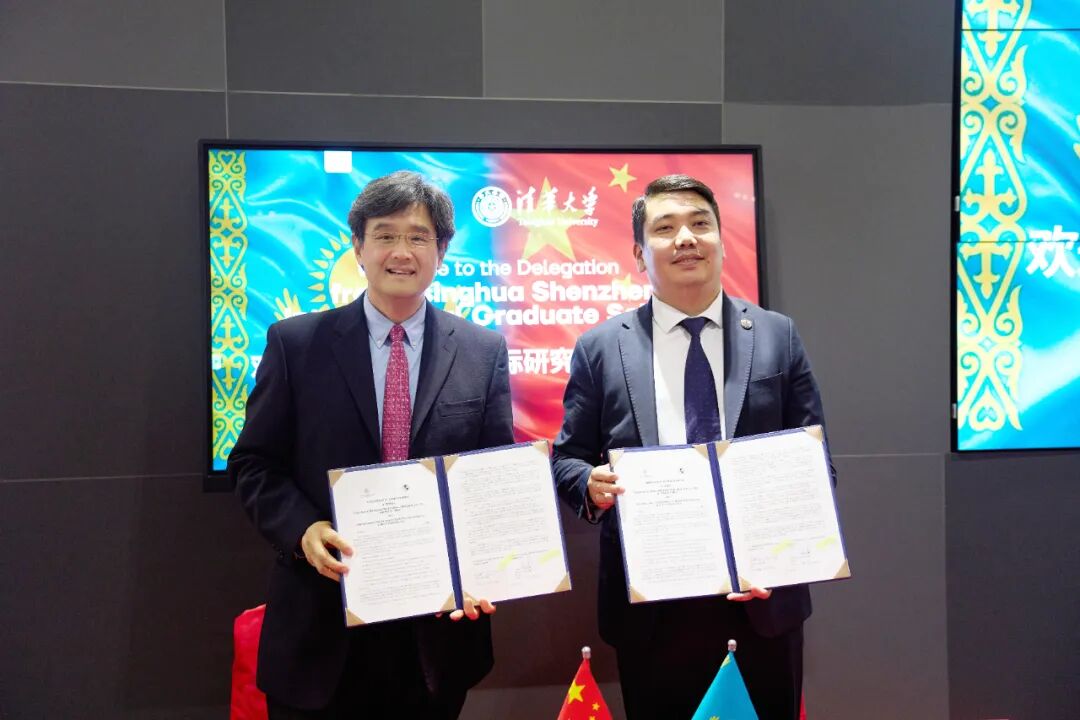
SIGS Dean Ouyang Zheng (L) and KazGASA Rector Bakhtiyar Sabdenaliyev sign an MoU.
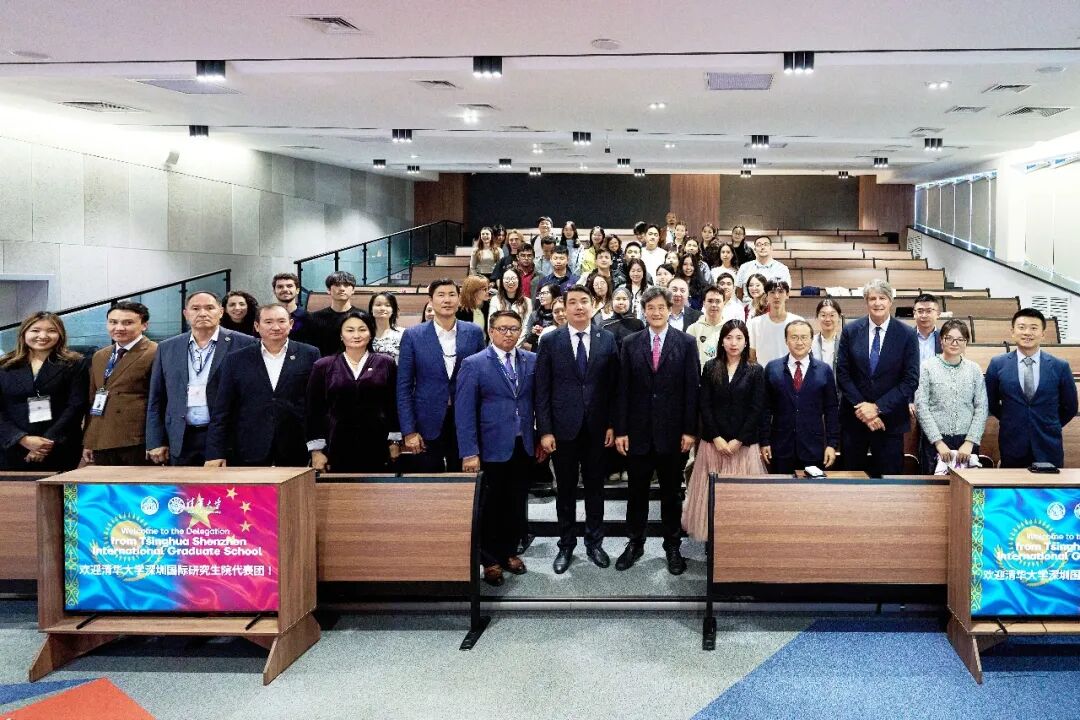
The delegation visits KazGASA.
At KazGASA, Rector Bakhtiyar Sabdenaliyev chaired a meeting with the delegation. Ouyang Zheng noted that the two institutions share closely aligned academic strengths in fields such as science, human habitats and green urban development, and expressed hope that the visit would establish regular channels for academic dialogue and advance faculty and student exchanges.
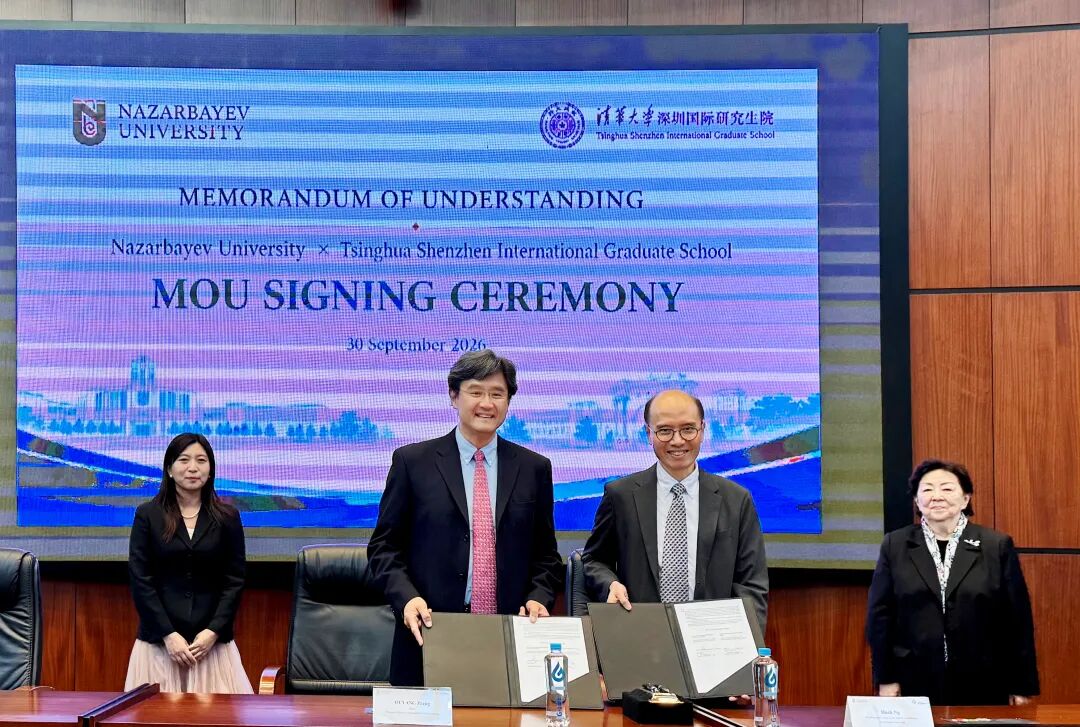
SIGS signs an MoU with Nazarbayev University.
At Nazarbayev University, the delegation was welcomed by Vice Presidents Kadisha Dairova and Huck Hui Ng.
Kazakhstan's flagship national research university, Nazarbayev University ranks first in Central Asia. It has strong research capabilities in medicine, engineering, mining and geosciences, with particular strengths in biomedicine and life and health sciences.
The two sides held detailed discussions and signed the MoU on joint development of academic disciplines, joint doctoral programs, and faculty and student exchanges. The delegation also toured the campus and laboratories at its School of Medicine to learn more about the university’s academic development and research in the life and medical sciences.
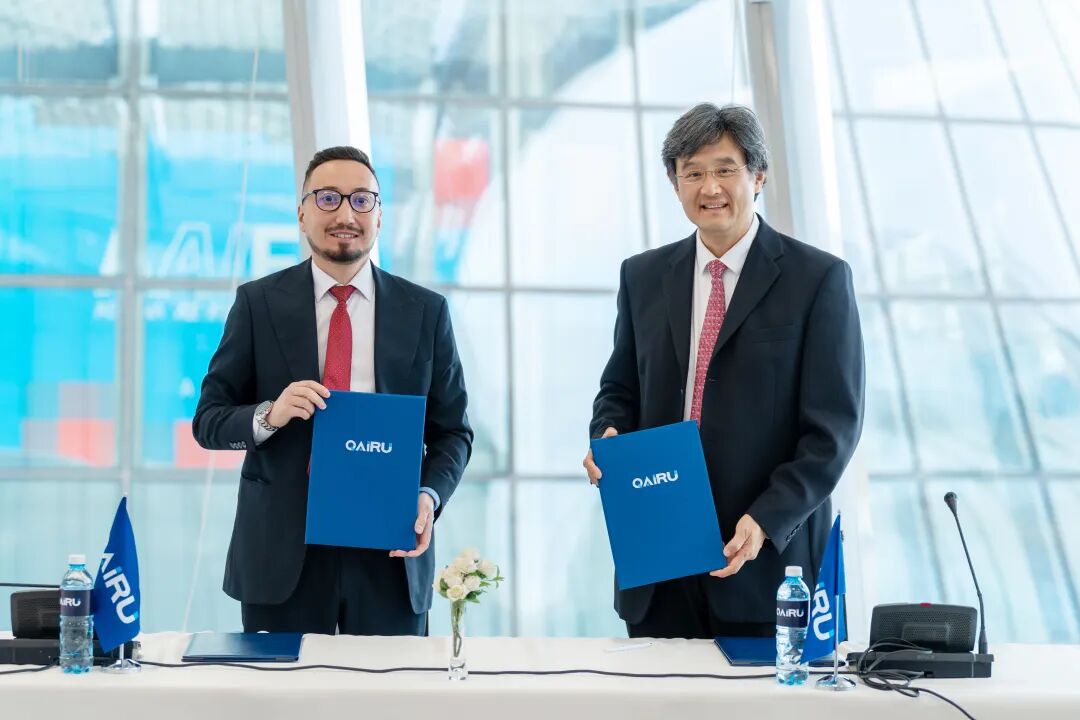
A scene of the MoU signing between SIGS and Qazaq AI Research University.
At Qazaq AI Research University, the delegation met with its Rector, Sapar Toksanov. The two institutions plan to organize academic seminars and explore reciprocal student exchange programs jointly.
Established as part of Kazakhstan’s national strategy, QAIRU is Central Asia’s first university with a distinctive focus on artificial intelligence.
During the visit, Ouyang Zheng attended the inaugural plenary meeting of the university’s international advisory board. The delegation also met with local representatives from education and industry sectors to discuss artificial intelligence and innovation in digital technologies.
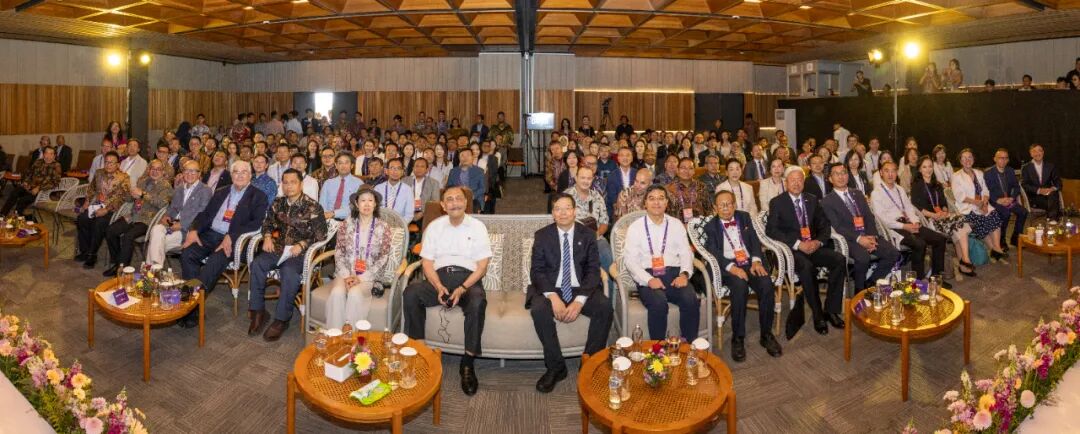
Guests at the China-Southeast Asia Forum on Higher Education and Industry Cooperation 2026 pose for a group photo.
From October 2 to 4, Qiu Yong, Secretary of the CPC Tsinghua University Committee, visited Malaysia and Indonesia to advance cooperation between Tsinghua University and Southeast Asian countries in areas such as education, science and technology, and industry, and contribute Tsinghua’s strength to building an even closer China-ASEAN community with a shared future.
On October 4, the China-Southeast Asia Forum on Higher Education and Industry Cooperation 2026 was held at the Tsinghua Southeast Asia Center.
During the forum, Tsinghua SIGS and ITS signed an MoU to advance cooperation in faculty and student exchanges, joint research and joint education programs. ITS is a leading public university of science and technology in Indonesia, with strong expertise in marine engineering, shipbuilding and renewable energy. It serves as an important hub for engineering innovation in the ASEAN region.
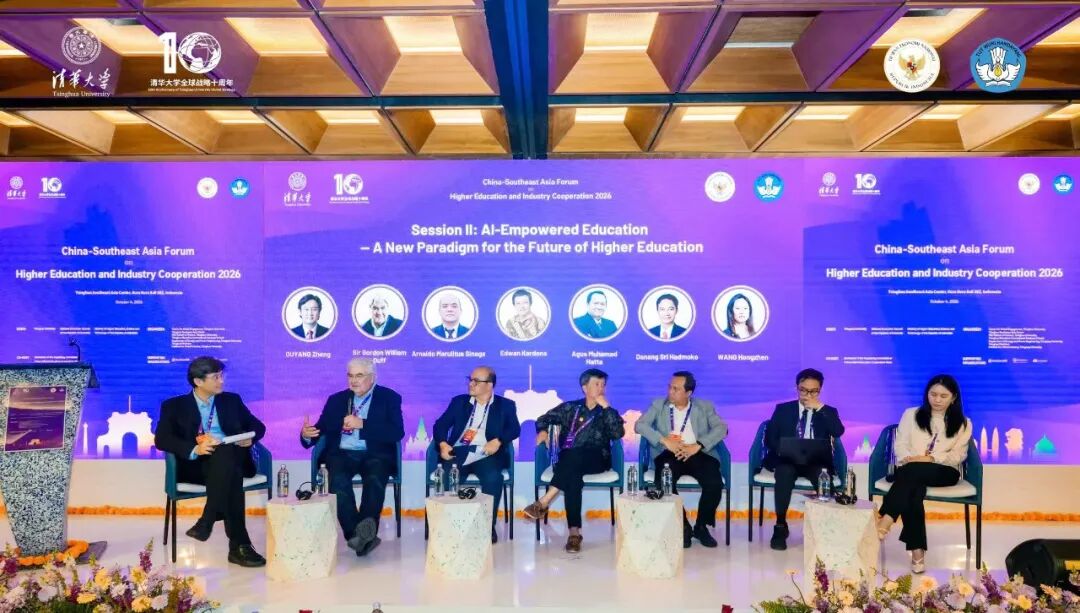
Ouyang Zheng (1st L) moderates a roundtable discussion at the China-Southeast Asia Forum on Higher Education and Industry Cooperation.
At the Tsinghua Southeast Asia Center, the delegation held extensive discussions with the center’s management team on how Tsinghua SIGS could cooperate with the center to expand cooperation and explore new opportunities for talent cultivation in ASEAN.
The visit further expanded the global partnership network of Tsinghua SIGS and established mechanisms for regular cooperation with key universities and emerging research institutions in Central Asia and ASEAN. The visit also contributed to the implementation of Tsinghua University’s Global Strategy and fostered exchanges in science and education between China and Central Asia, as well as between China and ASEAN.
_________________________________________________________
Source from the Office of Global Affairs
Edited by Peng Bin, Wang Jingli
Reviewed by Chen Jundou, Lin Zhoulu and Nie Xiaomei
Layout by Yuan Yiling