电话:
邮箱: xmhe@sz.tsinghua.edu.cn
地址: 国际一期
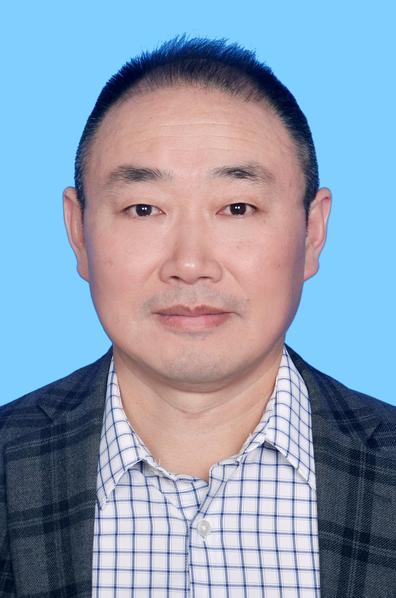
何晓明博士是清华大学长聘正教授、博士生导师,欧洲科学与艺术院院士, 美国医学和生物工程院会士, 美国机械工程师学会(ASME) 会士,及美国癌症协会研究学者。先后于1995和1998年在西安交通大学获得能源与动力(空调,制冷及低温)工程学士和硕士学位。在北京工业大学工作两年后,于2000年8月赴美国明尼苏达大学深造并于2004年5月取得工学博士学位, 然后在哈佛大学医学院麻省总医院进行了3年的博士后研究。于2007年加入南卡罗来纳大学成为机械和生物医学工程助理教授 (博导), 2011年加入俄亥俄州立大学成为生物医学和机械工程副教授 (博导),2017中旬晋升为终身正教授 (博导), 2017年底以终身正教授加入马里兰大学生物工程系,2026年以长聘正教授加入清华大学深圳国际研究生院生物医药与健康工程研究院至今。科研主要集中在开发微纳及量子尺度且对微环境响应的生物材料和医疗器械用于干细胞及免疫工程,生物系统包括外泌体、细胞、组织和器官的常温及低温保存,智能药物、基因及细胞的体内输送。得到包括美国国立卫生研究院(NIH), 美国国家科学基金(NSF), 美国癌症协会, 及马里兰干细胞基金在内主要科研基金机构的多项重大项目包括8个NIH R01s的支持。在高影响杂志包括Nature Biomedical Engineering和Nature Nanotechnology等发表了150多篇文章。拥有或申请了16项国际和美国专利并成立了初创公司产业化他的专利技术。科研成果已被引用了12000多次,h-index是64。先后领导或参与组织了多个国际会议包括国际低温生物学年会,ASME国际机械工程大会,ASME夏季生物工程会议,ASME全球医药和生物纳米工程会议,及国际生物力学大会。于2015-2021担任ASME生物传输(生物传热与传质)委员会副主席(2015-2018)和主席(2018-2021)。是ASME出版的医疗器械杂志(Journal of Medical Devices)现任主编,和国际低温生物学会当选主席(President-Elect)。
2004年7月-2007年8月,哈佛大学医学院麻省总医院,生物医学工程专业,博士后
2000年8月-2004年5月,明尼苏达大学-双城,机械工程专业,博士
1995年9月-1998年7月,西安交通大学,制冷及低温工程专业,硕士
1991年9月-1995年7月,西安交通大学,供热通风与空调工程专业,学士
2026年2月至今,清华大学,深圳国际研究生院,教授,博导
2017年12月-2025年12月,马里兰大学-学院公园,生物工程系,教授,博导
2017年6月-2017年12月,俄亥俄州立大学-哥伦布,生物医学工程系,教授,博导
2011年7月-2017年6月,俄亥俄州立大学-哥伦布,生物医学工程系,副教授,博导
2007年8月-2011年6月,南卡罗莱纳大学-哥伦比亚,机械工程系和生物医学工程部,助理教授,博导
2003年10月-2004年6月, 美国医疗系统公司,开发工程实习生
1998年8月-2000年8月,北京工业大学,供热通风与空调工程系,讲师
国际低温生物学会:当选主席(2026 - )
《医疗器械杂志》(美国机械工程师学会ASME出版):主编(2024 - )
华人生物协会评奖委员会:主席(2024 - )
国际低温生物学会年会:主席(2023 - 2024)
美国机械工程师学会生物传输委员会:主席(2018 - 2021)
何晓明教授的学术研究致力于将传热传质学、流体与固体力学、热力学、电磁学和机械设计等基本工程原理,与化学、生物学、免疫学、病理学、生理学和医学等学科相融合,以开发微纳及量子尺度且对微环境响应的生物材料和器械,用于干细胞及免疫工程、生物系统(包括生物大分子、生物颗粒、细胞、组织和器官)的低温和常温保存、及各种药物包括基因和细胞的体内智能输送。他已巧妙设计多种生物材料和器械,用于工程化小分子、生物大分子、免疫细胞,以及正常和癌干细胞,以开发治疗癌症、心血管疾病、不育、糖尿病和神经系统疾病等的新技术。他在这些多学科交叉领域已做出了许多开创性贡献,极大地促进了当前新兴的细胞医学(cell-based medicine)及传统分子医学(尤其是划时代的RNA疗法)的发展和应用。他的研究从2011年起持续得到NIH的四个不同研究所(NCI、NIBIB、NIAID 和 NHLBI)包括8个R01在内的资助。他还获得了来自美国国家科学基金(NSF)、美国癌症协会和马里兰干细胞研究基金等政府和私有研究资助机构的多项科研项目。总科研经费达2000多万美元。他在包括Nature Biomedical Engineering和Nature Nanotechnology在内的高影响因子期刊上发表了150多篇论文,并撰写了一本书和五本书的章节。他共有16项已授权专利和专利申请。他的科研成果已被累计引用了12000多次,h指数是64。
1. 基于人诱导万能干细胞仿生工程的个性化医药
2. 基于免疫细胞仿生工程的强化免疫疗
3. 靶向微环境响应基因和药物输送强化的免疫疗
4. 生物系统(干细胞、免疫细胞、组织、器官及其衍生物如外泌体和类器官)低温和常温保存新技术
5. 基于卵巢卵泡工程的辅助生殖新技术
6. 多尺度水凝胶生物材料使能的癌症耐药性三维建模
7. 基于纳米技术的癌症复发与转移靶向治疗和基础研究
[1] Shamul, J.G., Wang, Z., Gong, H., Ou, W., White, A.M., Garcia, D.P.M., Gu, S., Clyne, A.M., Quinones-Hinojosa, A., and He, X. Meta-analysis of the make-up and properties of in vitro models of the healthy and diseased blood-brain barrier. Nature Biomedical Engineering 2025; 9: 566-598
[2] Wang, Z., Stewart, S., Kumagai, M., Wang, E., Ou, W., Lu, Y., Meng, T., Xu, C., Hong, Y., Ren, S., and He, X. High-yield convenient mass production of high-quality homogenous human iPSC spheroids under Rock inhibitor-free 3D culture enabled by micropatterning and cold-triggered chemical-free cell detachment. Small Science 2025; 5: 2500201
[3] Mahanty, M., Ou, W., Zhu, X., Bromberg, J.S., He, X.*, and Rahaman, S.O.* A novel core-shell hydrogel 3D model for studying macrophage mechanosensing and foreign body giant cell formation. Advanced Healthcare Materials 2025; accept (*co-corresponding authors)
[4] Ou, W., Stewart, S., White, A.M., Kwizera, E.A., Xu, J., Shamul, J.G., Tkaczuk, K.H.R., Lu, X., and He, X. In-situ cryo-immune engineering of an immunologically hot tumor microenvironment with cold-responsive nanomaterials for cancer immunotherapy. Nature Communications 2023; 14: 392
[5] Stewart, S., Ou, W., Aranda-Espinoza, H., Rahaman, S.O., and He, X. Micromechanical characterizations and viscoelastic modeling reveal elastic and viscoelastic heterogeneities in ovarian tissue and the significant viscoelastic contribution to the apparent elastic modulus determined by AFM indentation. Acta Biomaterialia 2023; 168: 286-297
[6] Kwizera, E.A., Ou, W., Lee, S., Stewart, S., Shamul, J.G., Xu, J., Tait, N., Tkaczuk, K.H.R., and He, X. Greatly enhanced CTC culture enabled by capturing CTC heterogeneity using a PEGylated PDMS-titanium-gold electromicrofluidic device with glutathione-controlled gentle cell release. ACS Nano 2022; 16: 11374-11391
[7] Huang, H.*, He, X.*, and Yarmush, M.* Advanced technologies for the preservation of mammalian biospecimens. Nature Biomedical Engineering 2021; 5: 793-804 (*co-corresponding authors)
[8] White, A.M., Zhang, Y., Shamul, J.G., Xu, J., Kwizera, E.A., Jiang, B., and He, X. Deep learning-enabled label-free on-chip detection and selective extraction of cell aggregate-laden hydrogel microcapsules. Small 2021; 17: 2100491
[9] Jiang, B., Li, W., Stewart, S., Ou, W., Liu, B., Comizzoli, P., and He, X. Sand-mediated ice seeding enables serum-free low-cryoprotectant cryopreservation of human induced pluripotent stem cells. Bioactive Materials 2021; 6: 4377-4388
[10] Xu, J., Liu, Y., Li, Y., Wang, H., Stewart, S., Van der Jeught, K., Agarwal, P., Zhang, Y., Liu, S., Zhao, G., Wan, J., Lu, X., and He, X. Precise targeting of POLR2A as a therapeutic strategy for human triple negative breast cancer. Nature Nanotechnology 2019; 14: 388-397
[11] Zhang, Y., Wang, H., Stewart, S., Jiang, B., Ou, W., Zhao, G., and He, X. Cold-responsive nanoparticle enables intracellular delivery and rapid release of trehalose for organic solvent-free cryopreservation. Nano Letters 2019; 19: 9051-9061
[12] Agarwal, P., Wang, H., Sun, M., Xu, J., Zhao, S., Liu, Z., Gooch, K.J., Zhao, Y., Lu, X., and He, X. Microfluidics-enabled bottom-up engineering of 3D microvascularized human tumor for drug discovery. ACS Nano 2017; 11: 6691-6702
[13] Zhao, S., Xu, Z, Wang, H., Reese, B., Gushchina, L., Jiang, M., Agarwal, P., Xu, J., Zhang, M., Shen, Y., Liu, Z., Weisleder, N., and He, X. Bioengineering of injectable encapsulated aggregates of pluripotent stem cells for therapy of myocardial infarction. Nature Communications 2016; 7: 13306
[14] Zhao, S., Zhang, L., Han, J., Chu, J., Wang, H., Chen, X., Wang, Y., Tun, N., Lu, L., Bai, X.-F., Martha, Y., Devine, S., He, X.*, and Yu, J.* Conformal nanoencapsulation of allogeneic T cells mitigates graft-versus-host disease and retains graft-versus-leukemia activity. ACS Nano 2016; 10: 6189-6200 (*co-corresponding authors)
[15] Choi, J.K., Agarwal, P., Huang, H., Zhao, S., and He, X. The crucial role of mechanical heterogeneity in regulating follicle development and ovulation with engineered ovarian microtissue. Biomaterials 2014; 35: 5122-5128
He, X. and Bischof, J.C. (Editors). Multiscale Technologies for Cryomedicine-Implementation from Nano to Macroscale, Singapore: World Scientific Publishing Co./Imperial College Press, 2016 (ISBN: 978-981-4733-18-2)
1. He, X., Li, W., and Jiang, B. System, device, and method for cell cryopreservation via sand-mediated ice seeding. US patent application (divisional) No. US19/263,995, filed on 07/09/2025
2. He, X. System, apparatus, and method for spheroidal pluripotent stem cell generation using cold-triggered detachment. US patent application No. US19/090,572, filed on 03/26/2025
3. He, X. and Ou, W. In-situ cryo-immune engineering (ICIE) for cancer immunotherapy. Disclosed to the University of Maryland Technology and Commercialization Office on 05/15/2022. U.S. provisional patent application (US63/480434) filed on 01/18/2023; US patent application No. US18/415,331, filed on 01/17/2024
4. He, X. and Jiang, B. Method for cardiac differentiation of human pluripotent stem cells. Disclosed to the University of Maryland Technology and Commercialization Office on 12/20/2020; US patent application No. US17/814,044, filed on 07/21/2022
5. He, X., Xu, J., and Shamul, J.G. Microencapsulation-based isolation of human pluripotent and multipotent stem cells and methods of making and using the same. Disclosed to the University of Maryland Technology and Commercialization Office on 04/17/2021. US patent application No. US17/663,372, filed on 05/13/2022
6. He, X. and White, A.M. System and method for selective microcapsule extraction. Disclosed to the University of Maryland Technology and Commercialization Office on 04/16/2021; US patent application No. US17/725,096, filed on 04/20/2022
7. He, X., Li, W., and Jiang, B. System, device, and method for cell cryopreservation via sand-mediated ice seeding. Disclosed to the University of Maryland Technology and Commercialization Office on 01/28/2021; US patent application No. US17/659,432, filed on 04/15/2022; USPTO patent No. US 12,382,953 (granted on 08/12/2025)
8. He, X. System, device, and method for single-cell encapsulation and culture. US provisional application (US63/013,173) filed on 04/21/2020. US patent Application No. 17/920440, filed on 04/21/2021. International patent application (PCT/US2021/028503) filed on 04/21/2022
9. He, X., Lu, X., Xu, J. pH-activated nanoparticles. US Provisional Application (US62/752,851) filed on 10/30/2018. International patent application (PCT/US2019/058907) filed on 10/30/2019. US patent application No. US17/289,425, filed on 10/30/2019. European patent application No. EP19880846.1, filed on 10/30/2019
10. He, X., Zhao, S., Weisleder, N., Liu, Z., and Xu, Z. Bioengineering of injectable encapsulated aggregates of pluripotent stem cells for therapy of myocardial infarction. Disclosed to OSU Technology and Commercialization Office on10/24/2013. International Application No. PCT/US2017/058837, filed on 10/27/2017
11. He, X., Agarwal, P., and Zhao, S. Microcapsules encapsulating living cells. USPTO patent application No. 14/075,912, filed 11/08/2013
12. He, X. and Zhang, W. Microcapsules for cell microencapsulation. USPTO patent application No. US20120231443, filed on 03/092012
13. He, X. Encapsulation and controlled release of small molecules for intracellular delivery using thermally responsive nanocapsules. US patent application (US12/705,07) filed on 02/12/2012; USPTO patent No. US 8,318,207 (granted on 11/27/2012)
14. He, X. Methods for augmentation of cell cryopreservation. US patent application No. US12/796,994, filed on 06/09/2010
15. He, X. Controlled drug delivery using a thermally responsive nanocapsule to augment cryoablation. US patent application No. US12/714,931, filed on 03/012010
16. He, X., Toth, T., Toner, M., and Ed, J. Methods for cryopreservation of cells. International patent application (WO/2007/120829A2). US patent application No. US12/226,300 filed on 04/12/2007). USPTO patent No. US9538745B2 (granted on 01/10/2017)
2025 Fellow: Asia-Pacific Artificial Intelligence Association
2024Awardee: Maryland Stem Cell Research Fund Commercialization Program
2024Fellow: Industry Academy of the International Artificial Intelligence Industry Alliance
2023Member: European Academy of Sciences and Arts (EASA)
2023Finalist: Invention of the Year, University of Maryland
2022Awardee: Maryland Stem Cell Research Fund Validation Program
2021Awardee: Maryland Brain and Behavior Institute Seed Grant Program
2021Awardee: Maryland Stem Cell Research Fund Discovery Program
2020Awardee: NIH/NCI Innovative Research in Cancer Nanotechnology (IRCN) Program
2020Honoree: Maryland Research Excellence Celebration
2018Fellow: American Institute for Medical and Biological Engineering (AIMBE)
2017Fellow: The American Society of Mechanical Engineers (ASME)
2016Lumley Research Award: College of Engineering, Ohio State University
2015Finalist: Innovator of the Year, College of Engineering, Ohio State University
2014Member of the US-India Young Scientist Exchange Workshop on Nano-Engineering in Medicine: The Indo-US Science and Technology Forum (IUSSTF)
2013Member of the US-Japan Young Scientist Exchange Program on Bio-Micro-Nano: NSF-National Institute for Materials Science (NIMS, Japan)
2012Top 50 Reviewers: Biotechnology and Bioengineering
2011Research Scholar: American Cancer Society