
Tel:
Email: feiranli@sz.tsinghua.edu.cn
Address: Phase I, 16F, A1603
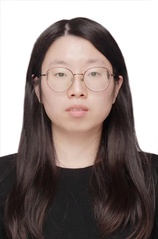
Feiran Li, Associate Professor, Doctoral Supervisor, Tsinghua Shenzhen International Graduate School, Tsinghua University.She was selected for the National Overseas High-Level Young Talent Program and recognized as an MIT Technology Review Innovator Under 35 China honoree, among other prestigious awards and honors.
She focuses on developing artificial intelligence-driven digital life technologies. Guided by the vision of understanding life, predicting life, and designing life, our group develops multi-scale digital twin models spanning molecular, cellular, and human levels to enable computational simulation, accurate prediction, and intelligent engineering of complex biological systems. Her research encompasses three major directions:1) Digital Cell and Intelligent Cell Factory Design.
By integrating multi-omics data, mechanistic models, and artificial intelligence algorithms, her group develops digital cell models for predicting metabolic fluxes, optimizing metabolic networks, and designing high-performance biological manufacturing systems.2) AI-driven Biomolecular Design. Developing deep learning and generative artificial intelligence approaches for functional prediction, performance optimization, and de novo design of enzymes and functional biomolecules.3) Digital Human and Precision Life Science. By integrating multi-omics data with physiological mechanisms, her group constructs multi-organ and multi-scale human digital models to investigate metabolic regulation, disease mechanisms, and drug response dynamics.
She has published research articles as the first author (including co-first author) or corresponding author in leading international journals, including Nature Catalysis, Nature Communications, Molecular Systems Biology, Proceedings of the National Academy of Sciences (PNAS), and Nucleic Acids Research. Her research has led to the development of advanced computational frameworks, including genome-scale yeast metabolic models, human digital twin models, and AI-enabled enzyme characterization systems, with applications in intelligent biomanufacturing, metabolic engineering optimization, and precision medicine. She has led and participated in multiple competitive research programs, including the National Excellent Young Scientists Fund (Overseas), National Key R&D Program, and the Key Program of the NSFC.
We are currently looking for postdoctoral fellows, research assistants, PhD students, and master’s students with backgrounds in synthetic biology, computational biology, machine learning, chemistry, biochemical engineering, bioinformatics, and pharmaceutical engineering with interests in conducting research related to biological system modeling.
2017-2021, Ph.D. in Systems Biology, Chalmers University, Sweden (Supervisor: Prof. Jens Nielsen)
2014-2017, M.S. in Biochemical Engineering, Tianjin University, China (Supervisor: Prof. Zhao Xueming)
2010-2014, B.S. in Chemical Biology, Tianjin Normal University, China
2026-present, Associate Professor, Tsinghua Shenzhen International Graduate School, China
2023-2026, Assistant Professor, Tsinghua Shenzhen International Graduate School, China
2021-2023, PostDoc, Chalmers University of Technology, Sweden (Advisor: Prof. Jens Nielsen)
Advanced Biotechnology, BioDeign Research, Youth Editor
Frontiers in Bioengineering and Biotechnology, Review Editor
Nature Communications, PNAS, iScience, Advanced Genetics, and Genome Biology, Reviewer
Artificial Intelligence aided Enzyme Design (SIGS), Frontiers in Synthetic Biology (SIGS),Computational Systems Biology Experiments (SIGS)
Our research program aims to develop next-generation digital life technologies by integrating artificial intelligence, systems biology, and synthetic biology. Guided by the vision of “understanding life, predicting life, and designing life,” we develop multi-scale digital twin models to quantitatively simulate complex biological systems, uncover fundamental biological principles, and enable intelligent engineering of living systems. Our research focuses on three major directions:
(1) Digital Cell Modeling and Intelligent Cell Factory Design
We develop AI-enabled digital cell models that integrate multi-omics data, mechanistic knowledge, and machine learning algorithms to construct predictive representations of cellular systems. These digital cells aim to quantitatively describe cellular metabolism, regulation, energy allocation, and physiological states, enabling rational design and optimization of engineered microorganisms.
·Development of multi-scale digital cell models integrating genomic, transcriptomic, proteomic, metabolomic, and regulatory information to predict cellular behaviors and dynamic states.
·Construction of AI-enhanced metabolic models to simulate carbon flux distribution, energy metabolism, redox balance, and cellular adaptation under different engineering conditions.
·Development of intelligent algorithms for microbial chassis selection, metabolic pathway optimization, and synthetic biology design.
·Application of digital cell technologies to engineer high-performance microbial cell factories for the sustainable production of valuable biochemicals, pharmaceuticals, and natural products.
(2) AI-driven Biomolecular Design and Functional Engineering
We develop artificial intelligence approaches for the discovery, prediction, and design of functional biomolecules, including proteins, enzymes, and regulatory elements. By combining deep learning, generative models, and biological knowledge, we aim to accelerate the engineering of biological components with desired functions and properties.
·Development of AI models for predicting protein and enzyme functions, catalytic activities, stability, and interactions.
·Design and optimization of novel enzymes and biological molecules through deep learning and generative artificial intelligence approaches.
·Integration of sequence, structure, biochemical, and evolutionary information for intelligent biomolecular engineering.
·Establishment of computational frameworks for enzyme discovery, activity improvement, and functional optimization toward industrial biotechnology and biomedical applications.
(3) Human Digital Twin and Computational Precision Medicine
We develop multi-scale human digital twin models by integrating multi-omics data, physiological knowledge, and artificial intelligence to understand human metabolism and disease mechanisms. These models aim to provide quantitative frameworks for predicting individual biological responses and enabling precision healthcare.
·Construction of multi-organ human digital models integrating genome-scale metabolic networks, physiological constraints, and clinical multi-omics data.
·Development of computational frameworks to simulate human metabolism, drug responses, and host–microbiome interactions.
·Identification of key metabolic pathways and molecular mechanisms underlying complex diseases.
·Application of digital human technologies for precision medicine, personalized therapeutic prediction, and biomedical discovery.
[1] Excellent Young Scientists Fund (Overseas), National Natural Science Foundation of China (NSFC), 2023-09 to 2026-08, Ongoing, Principal Investigator.
[2] Synthetic Biology Young Program, National Key R&D Program of China, 2024-12 to 2027-11, Ongoing, Task Lead.
[3] General Program, National Natural Science Foundation of China (NSFC), 2025-01 to 2028-12, Ongoing, Principal Investigator.
[4] Green Biomanufacturing Program, Guangdong Key Area R&D Program, 2025-01 to 2027-12, Ongoing, Task Lead.
[5] Key Program, National Natural Science Foundation of China (NSFC), 2026-01 to 2030-12, Ongoing, Task Lead.
[6] Shenzhen Special Fund for Medical Research, 2025-01 to 2027-12, Ongoing, Principal Investigator.
[7] Interdisciplinary Innovation Fund, Tsinghua Shenzhen International Graduate School, 2024-09 to 2027-09, Ongoing, Principal Investigator.
[8] Commissioned Horizontal Project: AI Driven Enzyme Design Technology Development, 2024-07 to 2026-06, Ongoing, Principal Investigator.
1. Luo J#, Wang H#, Moyer D, et al. Reconstruction of human metabolic models with large language models. Proceedings of the National Academy of Sciences, 2026, 123(15): e2516511123.
2. Wu K#, Liu H#, Zhou Y#, et al. Systematically exploring yeast metabolism through retrobiosynthesis and deep learning. Nature Catalysis, 2026, 9: 434–447.
3. Li X#, Guo Z#, Li Y, et al. Leveraging large language models for metabolic engineering design. Trends in Biotechnology, 2026.
4. Lyu B#, Wu K#, Huang Y, et al. GotEnzymes2: expanding coverage of enzyme kinetics and thermal properties. Nucleic Acids Research, 2026, 54(D1): D583–D592.
5. Chen Y*, Li F. Metabolomes evolve faster than metabolic network structures. Proceedings of the National Academy of Sciences 2024, 121, e2400519121.
6. Li F#, *, Chen Y, Gustafsson J, Wang H, Wang Y, Zhang C, Xing X. Genome-scale metabolic models applied for human health and biopharmaceutical engineering. Quantitative Biology. 2023, 11, 363-75.
7. Li F#, *, Chen Y#, Anton M#, et al. GotEnzymes: an extensive database of enzyme parameter predictions. Nucleic Acids Research 2023, D1, D583-D586.
8. Li F#, Yuan L#, Lu H, et al. Deep learning based kcat prediction enables improved enzyme constrained model reconstruction. Nature Catalysis 2022, 5, 662-672.
9. Li F, Chen Y, Qi Q, et al. Improving recombinant protein production by yeast through genome-scale modeling using proteome constraints. Nature Communications 2022, 13, 2969.
10. Li F*. Filling gaps in metabolism using hypothetical reactions. Proceedings of the National Academy of Sciences 2022, 119, e2217400119.
11. Lu H#, Li F#, Yuan L#, et al. Yeast metabolic innovations emerged via expanded metabolic network and gene positive selection. Molecular Systems Biology 2021, 17, e10427.
12. Domenzain I#, Li F#, Kerkhoven EJ, et al. Evaluating accessibility, usability and interoperability of genome-scale metabolic models for diverse yeasts species. FEMS Yeast Research 2021, 21, foab002
13. Lu H#, Li F#, Sánchez BJ, et al. A consensus S. cerevisiae metabolic model Yeast8 and its ecosystem for comprehensively probing cellular metabolism. Nature Communications 2019, 10, 3586
14. Li F#, Xie W#, Yuan Q, Luo H, Li P, et al. Genome-scale metabolic model analysis indicates low energy production efficiency in marine ammonia-oxidizing archaea. AMB Express 2018, 8, 106.
# Co-first author, * Corresponding author
1. MIT Technology Review 35 Innovators Under 35 China (2023)
2. National Overseas High-Level Talents (Youth) Project (2023)
3. Pengcheng Peacock Plan Specially Recruited Positions Category B Talent, (2023)
4. Chinese Government Award for Outstanding Self-Financed Students Abroad – Postdoctoral Researcher (2022)