Tel:
Email: jhli@mail.tsinghua.edu.cn
Address: Room 1810, International Phase I
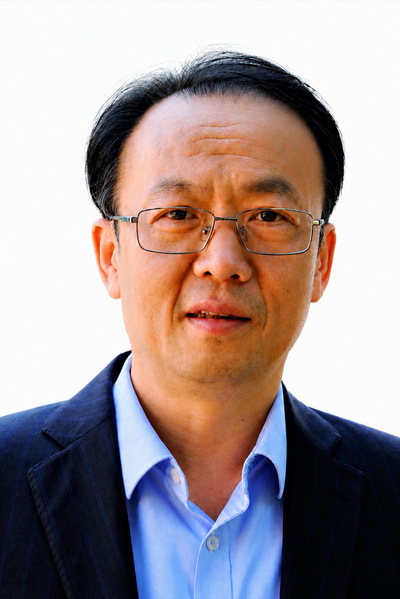
Li Jinghong, an academician of the Chinese Academy of Sciences, was a member of the 12th, 13th and 14th National Committee of the Chinese People's Political Consultative Conference. He is the director of the Analytical Center of Tsinghua University and a professor at the Biomedical and Health Engineering College of Tsinghua University's Shenzhen International Graduate School. Currently, he serves as the chairman of the Research Association of University Analytical Testing Centers and the secretary-general of the Nanoscience and Engineering Discipline Review Group of the State Council's Academic Degrees Office. In recent years, he has been dedicated to teaching and research in the fields of analytical chemistry, bioanalytical chemistry, chemical biology, single-cell analytical chemistry, electrochemical environment and energy. He has published over 500 SCI papers in academic journals such as Science, Nat. Mater., Nat. Nanotech., Nat. Biomedical Engineering, Nat. Protocol, etc., with his papers being cited more than 73,000 times and having an H-index of 135. From 2015 to 2024, he was selected as a Thomson Reuters Global Highly Cited Scientist for five consecutive years. He received the National Natural Science Award Second Prize, the Ministry of Education Natural Science Award First Prize, the Beijing Natural Science Award First Prize, and the China Analytical Testing Association Science and Technology Award First Prize, etc. He serves as the deputy editor and editorial board member of more than twenty international journals such as Chem. Soc. Rev.
July 1991–December 1996, Changchun Institute of Applied Chemistry, Chinese Academy of Sciences, Ph.D.
July 1986–May 1991, University of Science and Technology of China, Chemical Physics and Polymer Materials Engineering, Bachelor
June 2004–Present, Tsinghua University, Professor
May 2001–June 2004, Changchun Institute of Applied Chemistry, Chinese Academy of Sciences, Professor
January 1997–May 2001, University of Illinois at Urbana-Champaign, University of California, Santa Barbara, Clemson University, Postdoctoral Researcher
Chem. Soc. Rev., Editorial Board Member (Royal Society of Chemistry);
ACS Sensors, Editorial Board Member (American Chemical Society);
Biosensors and Bioelectronics, Editorial Board Member (Elsevier);
Small Methods, Editorial Board Member (Wiley) ;
Precision Chemistry, Editorial Board Member
Tsinghua Univ., Chemistry and Society
1. Nucleic acid analysis chemistry and biochemical biology: Develop technologies such as nucleic acid imaging, high-throughput sequencing, and spatial omics, and in situ analyze the dynamic distribution and biological functions of epigenetic markers, and explore the chemical biological regulation methods of key targets.
2. Proteomics and protein biochemistry: Develop new high-throughput proteomics technologies, design and synthesize protein chemical probes, combine protein chemical synthesis and purification techniques, and deeply study post-translational modifications of proteins, conformational dynamic changes, and their molecular mechanisms in life processes.
3. Immune regulation and drug development: Focus on the functional regulation mechanisms of tumor microenvironment and immune cells, develop new immune regulatory drugs, cyclic peptide drugs, targeted protein degraders, and antibody drugs.
4. Biomedical materials engineering: Design and construct functional biomedical materials (such as nanocarriers, hydrogels, intelligent biomimetic materials, etc.), explore the interaction mechanism between materials and the biological body, develop responsive intelligent drug delivery systems and tissue engineering scaffolds, and achieve precise controlled release of drugs and tissue repair and reconstruction in the human body.
5. AI and biochemical cross-disciplinary research: Develop new principles and algorithms of artificial intelligence, utilize the cross-fusion of artificial intelligence models and wet experiments, and strive for protein/nucleic acid functional research and intelligent design, rational design of drug molecules, and intelligent screening of disease targets.
1. 2023.01-2027.12, New Cornerstone Investigator Program, Bioanalytical Chemistry for Rapid Detection of Nucleic Acids with Single-Base Resolution, Principal Investigator
2. 2021.12-2026.12, National Key R&D Program of China Nanotechnology Key Special Project, New Methods for Electrical Measurement and Multimodal Characterization of Proteins at the Nanoscale, 2021YFA1200104, Principal Investigator
[1]Fu Li, Shao-Feng Liu, Wangyu Liu, Zhengwei Hou, Jiaxi Jiang, Zhong Fu, Song Wang, Yilong Si, Shaoyong Lu, Hongwei Zhou, Dan Liu, Xiaoli Tian, Hengwei Qiu, Yuchen Yang, Zhengcao Li, Xiaoyan Li, Linhan Lin*, Hongbo Sun*, Hao Zhang*, Jinghong Li*, 3D printing of inorganic nanomaterials by photochemically bonding colloidal nanocrystals, Science, 2023, 29, 381, 6665,1468-1474
[2]Qiong Wu, Jiajing Li, Fuan Wang*, Jinghong Li*, Autocatalytic DNA circuitry, Chem. Soc. Rev., 2024, 53, 10878-10899
[3]Xiaodan Jia, Yue Wang, Yue Qiao, Xiue Jiang*, Jinghong Li*, Nanomaterial-based regulation of redox metabolism for enhancing cancer therapy, Chem. Soc. Rev., 2024, 53, 11590-11656
[4]Ting Zhang, Yuxi Wang, Xucong Teng, Ruijie Deng*, Jinghong Li*, Preamplification-free viral RNA diagnostics with single-nucleotide resolution via a colorimetric nucleic acid test, Nat. Protoc., 2024, 19, 3426–3455
[5]Ting Zhang, Ruijie Deng*, Yuxi Wang, Chengyong Wu, Kaixiang Zhang, Chunyan Wang, Ningqiang Gong, Rodrigo Ledesma-Amaro, Xucong Teng, Chunrong Yang, Ting Xue, Yong Zhang, Yun Hu, Qiang He, Weimin Li*, Jinghong Li*, Amplification-free visual detection of SARS-CoV-2 variants with single-nucleotide resolution, Nat. Biomed. Eng., 2022, 6, 957–967
[6]Ningqiang Gong, Yuxuan Zhang, Xucong Teng, Yongchao Wang, Shuaidong Huo, Guangchao Qing, Qiankun Ni, Xianlei Li, Jinjin Wang, Xiaoxia Ye, Tingbin Zhang, Shizhu Chen, Yongji Wang, Jie Yu, Paul C. Wang, Yaling Gan, Jinchao Zhang, Jinghong Li*, XingJie Liang*, Proton-driven transformable nanovaccine (p-TV) for cancer immunotherapy, Nature Nanotech., 2020, 15, 1053–1064
[7]Ningqiang Gong, Xiaowei Ma, Xiaoxia Ye, Qunfang Zhou, Xiaoli Tan, Shengkun Yao, Shuaidong Huo, Tingbin Zhang, Shizhu Chen, Xucong Teng, Xixue Hu, Jie Yu, Yaling Gan, Huaidong Jiang, Jinghong Li*, Xing-Jie Liang*, Carbon dot-supported atomically-dispersed gold as a mitochondrial oxidative stress amplifier for cancer treatment, Nature Nanotech., 2019, 14, 379-387
[8]Ying Wang, Longhua Tang, Zhaohui Li, Yuehe Lin, Jinghong Li*, In situ simultaneous monitoring of ATP and GTP using graphene oxide nanosheet-based sensing platform in living cells, Nature Protoc., 2014, 9, 1944-1955
[9]Xiaonan Shan, Ismael Díez-Pérez, Luojia Wang, Peter Viktor, Ying Gu*, Lihua Zhang, Wei Wang, Jin Lu, Shaopeng Wang, Qihuang Gong, Jinghong Li*, Nongjian Tao*, Imaging the electrocatalytic activity of single nanoparticles, Nature Nanotech., 2012, 7, 668-672
[10]Jilin Xia, Fang Chen, Jinghong Li*, Nongjian Tao*, Measurement of the Quantum Capacitance of Graphene, Nature Nanotech., 2009, 4, 505-509
1.鞠幌先,李景虹主编,生物电化学,科学出版社,ISNB 978-7-03-073366-5, 2022
2.Hui Wei, Genxi Li, Jinghong Li, Biomedical Nanozymes from Diagnostics to Therapeutics, Springer Nature Singapore Pte Ltd., ISBN 978-981-99-3337-2, 2023
3.Huangxian Ju, Jinghong Li, Biochemical Sensors: Fundament and Development, World Scientific, ISBN 978-981-123-770-6, 2021
4.Huangxian Ju, Jinghong Li, Biochemical Sensors: Nanomaterial-Based Biosensing and Development, World Scientific, ISBN 978-981-123-770-6, 2021
1. Li Jinghong; Yu Hui; Yang Yuting; Sun Yi; Wang Liangan; Zeng Qiang, A high-sensitivity single-molecule microscopic imaging method and system, CN202310063367.7, 2025-10-03.
2. Li Jinghong; Teng Xucong; Hu Difei; Dai Yicong, A nucleic acid G-quadruplex unwinding agent and application thereof, CN202410789676.7, 2024-08-20.
1. Second Prize of the State Natural Science Award(2015)
2. First Prize of the Ministry of Education Natural Science Award(2012)
3. First Prize of the Beijing Municipal Natural Science Award(2022)