Tel: 0755-86540412
Email: hyan23@sz.tsinghua.edu.cn
Address: UP-1509, Energy and Environment Building
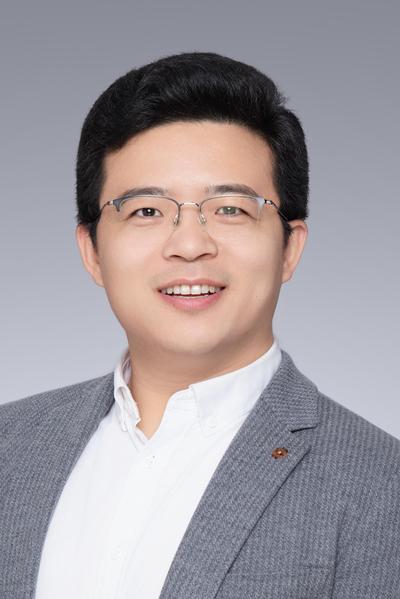
Hao Yan joined the Institute of Materials Research at Tsinghua Shenzhen International Graduate School in January 2023 and is currently a tenure-track associate professor and independent principal investigator. He has an interdisciplinary background spanning science, engineering, and medicine. His current research focuses on AI for Biomaterials, with particular interests in lipid biomaterials, biomimetic delivery systems, and highly stable optical biomaterials for functional delivery and in vivo interrogation.
His group aims to integrate materials science, biology, medicine, and artificial intelligence to address key challenges in nucleic acid delivery, gene and cell engineering, highly multiplexed molecular imaging, spatiotemporal single-cell analysis, and immune microenvironment remodeling. A major theme of his recent work is the AI-driven discovery and mechanistic understanding of lipid biomaterials for precision delivery, alongside the development of immunoregulatory biomaterials for chronic inflammatory diseases, including barrier repair, synovial microenvironment reprogramming, and bone-marrow niche engineering in rheumatoid arthritis.
Over the past five years, Hao has published 10 papers as first or corresponding author (including co-first/co-corresponding author) in leading journals in biomaterials, molecular imaging, and nanomedicine, including Advanced Materials, Advanced Functional Materials, Biomaterials, Light: Science & Applications, and European Journal of Nuclear Medicine and Molecular Imaging. Before joining Tsinghua SIGS, he conducted postdoctoral research in the laboratory of Prof. Seok-Hyun Yun at Harvard Medical School and Massachusetts General Hospital, where he participated in an NIH R01 project as well as major NIH-funded programs including the NIH Director’s Pioneer Award and the NIH Director’s Transformative Research Award. His research there established a strong foundation in advanced optical biointerfaces, high-dimensional imaging, and single-cell technologies.
Sep. 2012–Jul. 2018, Ph.D. in Materials Science and Engineering, Tsinghua University, China
Sep. 2008–Jul. 2012, B.S. in Materials Chemistry, Tianjin University, China
Jan. 2026–Present, Associate Professor (Tenure-Track), Institute of Materials Research, Tsinghua Shenzhen International Graduate School, Tsinghua University, China
Jan. 2023–Dec. 2025, Assistant Professor, Institute of Materials Research, Tsinghua Shenzhen International Graduate School, Tsinghua University, China
Mar. 2019–Dec. 2022, Postdoctoral Research Fellow, Harvard Medical School and Massachusetts General Hospital, USA
Sep. 2018–Jan. 2019, Research Assistant, School of Materials Science and Engineering, Tsinghua University, China
Youth Editorial Board Member of Exploration (since Feb. 2025); former Guest Editor of Frontiers in Pharmacology (May 2022–Aug. 2022). Also serves as a peer reviewer for Biomaterials, Theranostics, Advanced Healthcare Materials, Advanced Functional Materials, Chemical Engineering Journal, Frontiers in Immunology, Biomedical Microdevices, Nanomedicine, Next Materials, and other journals.
Graduate Courses (SIGS):
Biomaterials Science and Technology (85991353, 3 credits)
Probe Materials in Molecular Imaging (85991342, 2 credits)
Materials Innovation and Engineering Practice: Career Development Workshop (65990412, 2 credits)
Interdisciplinary Innovation Practice: Exploring Tumor-Bearing Mice through “Living Light” (65990392, 2 credits)
Hao Yan’s group works at the frontier of interdisciplinary research across materials science, biomedicine, optical imaging, data science, and artificial intelligence, with a central focus on AI for Biomaterials. The group aims to develop intelligent biomaterials that can read, deliver, regulate, and therapeutically reshape specific biological processes based on multiscale understanding of diseases at the tissue, cellular, and molecular levels. These efforts are directed toward nucleic acid delivery, gene and cell engineering, highly multiplexed in vivo molecular imaging, spatiotemporal single-cell analysis, and immune microenvironment remodeling in chronic inflammatory diseases.
The group’s major research directions include: 1) AI-driven lipid biomaterials for precision delivery: developing ionizable lipids and biomimetic lipid nanocarriers, and integrating modular material libraries, high-throughput screening, interpretable machine learning, and in vivo functional validation to transform nucleic acid delivery from empirical optimization into data-driven and intelligent design; 2) Highly stable optical biomaterials for in vivo imaging and single-cell analysis: developing highly multiplexed and photostable optical biomaterials for molecular imaging, local pharmacokinetic visualization, and spatiotemporal single-cell interrogation; 3) Immunoregulatory biomaterials for complex disease intervention: engineering biomaterials for immune microenvironment reprogramming and barrier repair in chronic inflammatory diseases such as rheumatoid arthritis. Ongoing projects in the group focus on AI-driven discovery of lipid biomaterials, extrahepatic and organ-selective delivery, biomimetic delivery systems, and immunoregulatory biomaterials.
Open Positions: We welcome passionate, highly motivated, and creative postdoctoral fellows, Ph.D. students, and graduate students to join our team.
Principal Investigator, National Natural Science Foundation of China Young Scientists Fund (Category C), 2024
Principal Investigator, Ministry of Education Overseas Talent Program, 2025
Principal Investigator, Guangdong Pearl River Young Talent Program, 2024
Co-Principal Investigator, Interdisciplinary Research Project, Tsinghua Shenzhen International Graduate School, 2023
1. M. Nicola#, H. Yan#, SH. Yun*, et al. Large-scale combinatorial optical barcoding of cells with laser particles. Light: Science & Applications, 2025, 14(1): 148.
2. Q. Wang#, Z. Zhang#, H. Yan*, et al. Bispecific, Exosome‐Mimetic Lipid Nanoparticles Facilitate Dual siRNAs for Synergistic Therapy against Pancreatic Cancer. Advanced Functional Materials, 2024, 2400485.
3. H. Yan, XD Sun*, J Tian*, FY Kang*, et al. Planted graphene quantum dots for targeted, enhanced tumor imaging and long-term visualization of local pharmacokinetics. Advanced Materials, 2023: 2210809.
4. H. Yan, SH Yun*, et al. All-natural-molecule, self-luminescent photodynamic therapy results in complete tumor regression and prevents metastasis, Biomaterials, 2023: 122079.
5. Q. Wang, JY. Wang, H. Yan*, et al. An ultra-small bispecific protein augments tumor penetration and treatment for pancreatic cancer. European Journal of Nuclear Medicine and Molecular Imaging, 2023: 1-15. (Medical Imaging Top)
6. Q. Wang#, H. Yan# (co-first author), J Tian*, XM Zhao* et al. Construction of a novel bispecific fusion protein to enhance targeting for pancreatic cancer imaging, Biomaterials. 2020, 255: 12061-12070.
7. H. Yan, J Tian*, FY Kang*, et al. All-in-One Nanoparticles for Trimodality Imaging-Guided Intracellular Photo-magnetic Hyperthermia Therapy under Intravenous Administration, Advanced Functional Materials. 2018, 1705710.
8. Q. Wang#, H. Yan#, J Tian* et al. A novel plectin/integrin-targeted bispecific molecular probe for magnetic resonance/near-infrared imaging of pancreatic cancer, Biomaterials. 2018, 183: 173-184.
Outstanding Young Scholar, Institute of Materials Research, Tsinghua Shenzhen International Graduate School, Tsinghua University (2025)
Outstanding Alumni Affairs Contributor, Tsinghua University Alumni Association of Shenzhen (2025)
Outstanding Young Teacher, Institute of Materials Research, Tsinghua Shenzhen International Graduate School, Tsinghua University (2024)
Outstanding Student Leader, Tsinghua University (2013)
Outstanding Graduate, Tianjin Municipality (2012)
Outstanding Student Party Member, Tianjin University (2011)