Tel:
Email: Jxhuang@sz.tsinghua.edu.cn
Address: Bldg. H 316
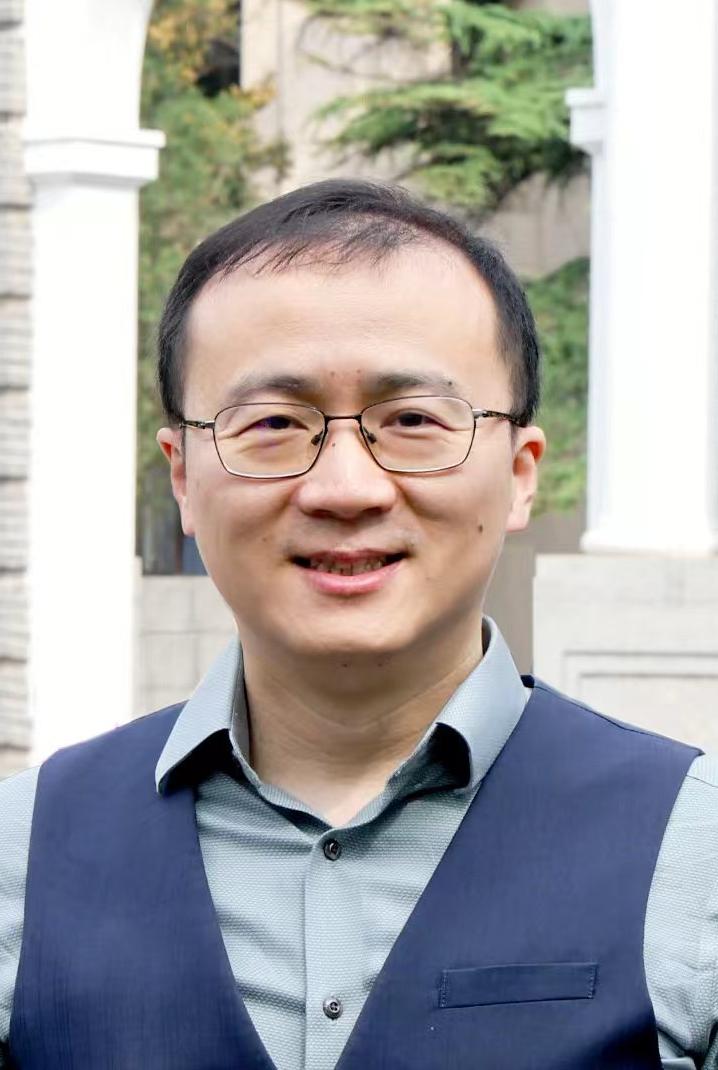
Jianxiang Huang is a tenured associate professor at Tsinghua University Shenzhen International Graduate School (SIGS). He also serves as the Vice Dean of the Institute of Future Human Habitats (iFHH) at Tsinghua SIGS. His research focus on sustainable high density cities, in which he develops new theories, new tools, and new thinking to the advancement of urban planning and design. He has published more than 50 peer-reviewed papers in reputable journals, and he work has been funded by the China National Natural Science Foundation, Hong Kong Research Grants Council, the Health and Medical Research Fund, and China‘s National High-level Overseas Talents Scheme. The impact of his work extends beyond academia, as his software packages have been applied in various real-world projects across Hong Kong, Singapore, mainland China, the US, and beyond.
Before joining Tsinghua, he was a tenured Associate Professor in the Department of Urban Planning and Design at the University of Hong Kong, where he founded and led the Sustainable High-Density Cities Lab, an interdisciplinary group for sustainable urban development, and directed the Master of Urban Design program, the oldest of its kind in Asia. He is a LEED Accredited Professional, a member of the American Institute of Certified Planners (Massachusetts Chapter), and a former board member of the International Association for China Planning. Earlier in his career, he practiced as an urban designer at Sasaki Associates (USA), contributing to projects honored by the Society for College and University Planning, the International Downtown Association, the American Institute of Architects, and the Boston Society of Architects. He is also the founder and CEO of EnEnP, a technology start-up leveraging digital innovation to advance sustainable urban development. Huang holds a Doctor of Design from Harvard University, a Master in City Planning from MIT, and Bachelor’s and Master’s degrees in Architecture from Tsinghua University.
2010-2013 | Doctor of Design, Graduate School of Design, Harvard University |
2005-2007 | Master in City Planning, Department of Urban Studies and Planning, Massachusetts Institute of Technology |
2003-2005 | Master of Architecture, School of Architecture, Tsinghua University |
1999-2003 | Bachelor of Architecture (Minor in English), School of Architecture, Tsinghua University |
2025/03-Pre. Institute of Future Human Habitats, Tsinghua University International Graduate School,Associate Professor with Tenure
2023/05-2025/03 Department of Urban Planning and Design, Faculty of Architecture, The University of Hong Kong,Associate Professor with Tenure
2013/06-2023/04 Department of Urban Planning and Design, Faculty of Architecture, The University of Hong Kong,Assistant Professor
2007/10-2010/08,Sasaki Associates, Urban Designer
2025-Pre. Member of the Executive Committee, the Global Designers Association
2023-Pre. Member of the Environment and Sustainability Committee, the Hong Kong Construction Industry Council.
2024-Pre. Hong Kong Institute of Urban Designers, Member of the Committee of Research and Education
2009-Pre. US Green Building Council, LEED AP
2009-Pre. Member of the American Institute of Certified Planner, Massachusetts Chapter
2018-Pre. Member of the Association of Collegiate Schools of Planning
2009-Pre. Member of International Association for China Planning
2013-2014 Member of the Urban Microclimate Taskforce, Hong Kong Green Building Council
2007-2010 Member, American Planning Association
Fall 2025, Urban Design Theory, SIGS
Spring 2026, Urban Design Studio, SIGS
My work centers on urban performance simulation, optimization, and data analytics, with a strong emphasis on translating research into practical applications. In urban performance simulation, I have pioneered the ray tracing-based CityComfort+ method, overcoming traditional bottlenecks in radiative heat transfer calculations to achieve high-precision evaluation of urban microclimates and thermal comfort. He also developed the UrBEC model, which resolves efficiency challenges in building-climate coupling simulations and quantitatively reveals the negative feedback mechanism between urban heat island effects and air-conditioning waste heat. His research extends to novel areas such as centralized heating systems and vegetation evaporative cooling, with model accuracy validated through wind tunnel experiments and field measurements in Hong Kong and three other cities.
In urban data analytics, I have applied machine learning to emerging data sources like social media. For instance, I have validated Kevin Lynch’s urban image theory using Instagram photo recognition, dynamically monitored Taipei residents’ environmental perceptions via Twitter data, and combined POI (point-of-interest) with mobility data to quantitatively analyze Christopher Alexander’s urban structure theory. My findings revealed that high-rise buildings positively impact urban vitality in Asian cities—a pattern contrasting with North American trends.
My self-developed software package (e.g., CityComfort+) has been applied to urban projects in Hong Kong, Hangzhou, the U.S., the U.K., and Singapore. Notable achievements include passive cooling effects of 1°C in Hong Kong’s To Kwa Wan and Hangzhou Future Community urban renewal projects. These innovations were recognized as a Research Impact Case by the University of Hong Kong and awarded the Third Prize for Scientific and Technological Progress by Zhejiang Province. My work has been featured in international media such as Xinhua News Agency, The New York Times, Peak Magazine and BBC, and showcased at the 2019/20 Hong Kong-Shenzhen Bi-City Biennale of Urbanism/Architecture.
1. Chang, H.; He, Y.; Chu, C.; Huang, J.* (2026) “Do car-free initiatives enhance urban diversity? Causal evidence from CicLAvia in Los Angeles,” Cities (In Press)
2. Li, J., Jones, P., Lu, W., Huang, J.* (2026) “The carbon exceedance of building tall: Towards a correction model for office buildings in China,” Vol. 287, 113802 https://doi.org/10.1016/j.buildenv.2025.113802
3. Xia, Y., Lu, W.*, Peng, Z., Huang, J., Niu, J. (2025) “Understanding the impacts of space design on local outdoor thermal comfort: An approach combining DepthmapX and XGBoost,” Energy and Buildings Vol. 332, 115451 https://doi.org/10.1016/j.enbuild.2025.115451
4. Jones, P., Huang, J.*(2025) “Sustainable urban built environment: Principles, tools, and applications” in Routledge Handbook of Smart Built Environment, pp. 243–257 https://doi.org/10.1201/9781003383840-15
5. Xu, Z., Lu, W., Peng, Z., Huang, J., Schuldenfrei, E.* (2025) “Exploring floor plan design to achieve indoor thermal comfort in public housing: An integrated heat graph and machine learning approach,” Building and Environment Vol. 271, 112609 https://doi.org/10.1016/j.buildenv.2025.112609
6. Zheng, L., Lu, W.*, Huang, J., Xue, F. (2025) “Harnessing geographic information system and street view imagery for thermal gradient distribution auditing,” Urban Climate Vol. 59, 102248 https://doi.org/10.1016/j.uclim.2024.102248
7. Li, X., Lu, W., Peng, Z., Zhang, Y., Huang, J.(2024) “Generative design of walkable urban cool spots using a novel heuristic GAN×GAN approach,” Building and Environment Vol. 266, 112027 https://doi.org/10.1016/j.buildenv.2024.112027
8. Deng, X., Bao, Z., Chen, S., Huang, J., Jones, P. (2024) “Opening windows as a supplementary ventilation strategy for large classrooms in a pandemic situation: Field measurements and simulation,” Building and Environment Vol.258, 111589 https://doi.org/10.1016/j.buildenv.2024.111589
9. Tian, L.; Hao,T.; He, X.; Chan, I.; Niu, J.; Chan, P.W.; Ng, WY.; Huang, J.* (2024) “Examining the non-linear relationship between urban form and air temperature at street level: A case of Hong Kong,” Building and Environment Vol. 264, 111884 https://doi.org/10.1016/j.buildenv.2024.111884
10. He, X., Li, L., Mo, Y., Huang, J., Qin, S.J. (2024) A distributed route network planning method with congestion pricing for drone delivery services in cities Transportation Research Part C: Emerging Technologies, Vol. 160, 104536 https://doi.org/10.1016/j.trc.2024.104536
11. Huang, J.*; Tang, X.; Jones, P.; Hao, T.; Tundokova, R.; Walmsley, C.; Lannon, S.; Frost, P.; Jackson, J. (2024) Mapping Pedestrian Heat Stress in Current and Future Heatwaves in Cardiff, Newport, and Wrexham in Wales, UK Building and Environment, Vol. 251, 111168 https://doi.org/10.1016/j.buildenv.2024.111168
12. Zhan, J.; He, W.*; Huang, J. (2024) Comfort, carbon emissions, and cost of building envelope and photovoltaic arrangement optimization through a two-stage model Applied Energy, Vol. 356, 122423 http://10.1016/j.apenergy.2023.122423
13. Shi, J.; Huang, J.; Guo, M.; Tian, L.; Wang, J.; Wong, T.W.; Webster, C.; Leung, G.M.; Ni, M.Y. (2023) Contributions of residential traffic noise to depression and mental wellbeing in Hong Kong: A prospective cohort study, Environmental Pollution, Vol. 338, 122641 http://10.1016/j.envpol.2023.122641
14. Guo, M.; Lin, Y.; Shyu, R.J.; Huang, J.* (2023) Characterizing Environmental Pollution with Civil Complaints and Social Media Data: A Case of the Greater Taipei Area, Journal of Environmental Management Vo. 348, 119310 http://10.1016/j.jenvman.2023.11931
15. Hao, T.; Zhao, Q.; Huang, J.* (2023) Optimization of Tree Locations to Reduce Human Heat Stress in an Urban Park, Urban Forestry & Urban Greening, Vol. 86: 128017 http://10.1016/j.ufug.2023.128017
16. Hao, T.; Chang, H.; Liang, S.; Jones, P.; Chan, PW.; Li, L.; Huang, J.* (2023) Heat and park attendance: Evidence from “small data” and “big data” in Hong Kong, Building and Environment, Vol. 234, 110123 https://doi.org/10.1016/j.buildenv.2023.110123
17. Zhan, J., He, W.*, Huang, J. (2023), Dual-Objective Building Retrofit Optimization under Competing Priorities using Artificial Neural Network, Journal of Building Engineering, Vol. 70, 106376 https://doi.org/10.1016/j.jobe.2023.106376
18. Huang, J.*; Cui, Y.; Li, L.; Guo, M.; Ho, HC.; Lu, Y.; Webster, C. (2023) Re-Examining Jane Jacobs’ Doctrine using New Urban Data in Hong Kong,” Environment and Planning B: Urban Analytics and City Science, Vol. 0(0),1-18 https://doi.org/10.1177/23998083221106186
19. Hao, T.; Huang, J.*; He, X.; Li, L.; Jones, P. (2023) “A Machine Learning-Enhanced Design Optimizer for Urban Cooling,” Indoor and Built Environment, Vol. 32(2), 355-374 https://doi.org/10.1177/1420326X221112857
20. Huang, J.*; Cui, Y.; Chang, H.; Obracht-Prondzyńska, H.; Kamrowska-Zaluska, D.; Li, L. (2022) “A City is Not a Tree: A Multi-City Study of Urban Structure and Urban Life,” Landscape and Urban Planning, Vol. 226, 104469 https://doi.org/10.1016/j.landurbplan.2022.104469
21. Huang, J.*; Hao, T.; Wang, Y.; Jones, P. (2022) “A Street-Scale Simulation Model for the Cooling Performance of Urban Greenery: Evidence from a High-Density City,” Sustainable Cities and Society, Vol. 82, 103908 https://doi.org/10.1016/j.scs.2022.103908
22. Chang, H.; Huang, J.; Yao, W.; Zhao, W.; Li, L.* (2022) How do new transit stations affect people's sentiment and activity? A case study based on social media data in Hong Kong,” Transport Policy, Vol. 120, 139-155 https://doi.org/10.1016/j.tranpol.2022.03.011
23. Huang, J.; Obracht-Prondzynska, H.; Kamrowska-Zaluska, D.; Sun, Y.; Li, L.* (2021), “The image of the City on social media: A comparative study using “Big Data” and “Small Data” methods in the Tri-City Region in Poland,” Landscape and Urban Planning, Vol. 206, 103977 https://doi.org/10.1016/j.landurbplan.2020.103977
24. Huang, J.*; Xu, Y.; Jones, P.; Li, X.; Guo, M.; Liu, G.; Ji, J.S. (2021) “Building Energy and Thermo-Hydraulic Simulation (BETHS) for District Heat System in Residential Communities: A Case of Shenyang, China,” Energy and Buildings, Vol. 247, 11114 https://doi.org/10.1016/j.enbuild.2021.111114
25. Huang, J.; Jones, P.*; Zhang, A.; Hou, S.S.; Spengler, J.D. (2021), “Outdoor Airborne Transmission of Coronavirus Among Apartments in High-Density Cities,” Frontiers in Built Environment, Vol. 7, 666923 https://doi.org/10.3389/fbuil.2021.666923
26. Huang, J.*; Jones, P.; Zhang, A.; Peng, R.; Li, X.; Chan, P.W. (2020) “Urban Building Energy and Climate (UrBEC) Simulation: Example Application and Field Evaluation in Sai Ying Pun, Hong Kong,” Energy and Buildings, Vol. 207, 109580 https://doi.org/10.1016/j.enbuild.2019.109580
27. Huang, J.*; Chen, Y.; Jones, P.; Hao, T. (2020) “Heat Stress and Outdoor Activities in Open Spaces of Public Housing Estates in Hong Kong: A Perspective of the Elderly Community,” Indoor and Built Environment, Vol. 31(6), 1447-1463 https://doi.org/10.1177/1420326X20950448
28. Liang, W.; Huang, J.*; Jones, P.; Hang, J.; Wang, Q. (2018) “A Zonal Model for Assessing Street Canyon Air Temperature of High-Dense Cities,” Building and Environment, Vol. 132, 160-169 https://doi.org/10.1016/j.buildenv.2018.01.035
29. Huang, J.*; Zhou, C.; Zhuo, Y.; Xu, L.; Jiang, Y. (2016) “Outdoor thermal environments and activities in open space: An experiment study in humid subtropical climates” Building and Environment, Vol. 103, 238-249 https://doi.org/10.1016/j.buildenv.2016.03.029
30. Huang, J.*; Cedeño-Laurent, J.G.; Spengler, J.D. (2014) “CityComfort+: A Simulation-Based Method for Predicting Mean Radiant Temperature in Dense Urban Areas,” Building and Environment, Vol. 80, 84-95 https://doi.org/10.1016/j.buildenv.2014.05.019
l Jones, P.; Huang, J. (2025) Sustainable urban built environment: Principles, tools, and applications, Routledge Handbook of Smart Built Environment, pp. 243–257
l Huang, J.; Spengler, J.D. (2016) US Software License “CityComfort+ Rhino Software Plugin: A Simulation-based Tool for the Assessment of Urban Microclimate and Pedestrian Thermal Comfort in Dense Cities”
l 2020, Science and Technology Innovation Award of Zhejiang Province, China (Third Prize) “Smart Technologies for Low Energy Community Design and Application in Subtropical Climates” |
l 2019, Best Presentation Award of the Smart and Sustainable Planning for Cities and Regions 2019 International Conference, “The Image of the City on Social Media: A Comprehensive Study on the “Big Data” and “Small Data” in the Tri-City Region of Gdansk, Sport and Gdynia, Poland”, held in Bolzano / Bozen, Italy |
l 2019, Research Output Prize of the Faculty of Architecture, The University of Hong Kong l 2017, Global Educator Award by the University of Minnesota in recognition of outstanding leadership in internationalizing urban planning education. |